50/30/20 Budget Calculator
Needs
Rent, Utilities, Groceries, Transport
₹0
50%
Wants
Dining, Entertainment, Shopping
₹0
30%
Savings & Debt
Investments, Emergency Fund, Loans
₹0
20%
Recommended Strategy
Most of us check our bank balance at least once a day. We see the number drop after paying rent, then dip again after buying groceries, and finally settle after an impulse purchase on Amazon or Flipkart. It feels like we are always chasing that number. If you have ever wondered why your savings account stays empty despite having a decent salary, the problem likely isn’t how much you earn. It is how you allocate it.
The 50/30/20 rule is a simple budgeting framework created by US Senator Elizabeth Warren that divides your after-tax income into three categories: needs, wants, and savings. While it originated in the United States, this method has become one of the most popular tools for personal finance management in India. However, applying a Western rule to an Indian context requires some tweaks. Rent in Mumbai costs differently than in Patna. Groceries vary by region. And the definition of a "need" changes depending on whether you live alone or support a joint family.
This guide breaks down exactly how to use the 50/30/20 rule in India in 2026. We will look at what goes into each bucket, how to adjust for high-cost cities, and where to put your money to actually grow it.
Understanding the Three Buckets
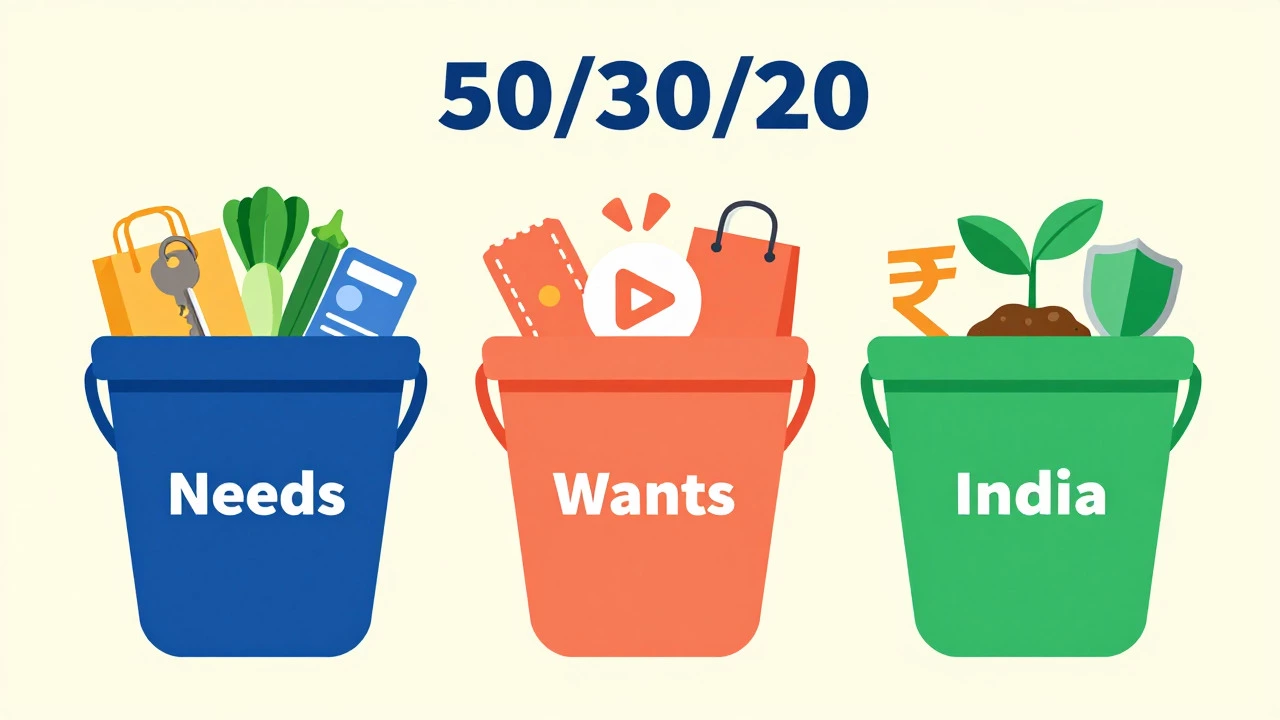
The core idea behind this rule is simplicity. Instead of tracking every single rupee spent on tea or auto-rickshaws, you categorize your spending into three broad buckets based on your net income (the money left after taxes).
- 50% for Needs: These are expenses you cannot avoid. If you don't pay them, you lose your home, your job, or your health.
- 30% for Wants: These are lifestyle choices. They make life enjoyable but aren't strictly necessary for survival.
- 20% for Savings and Debt Repayment: This is money set aside for your future self, including emergency funds, investments, and paying off loans.
Let's break down what falls into each category specifically for an Indian resident.
Bucket 1: The 50% Needs Category
In many Western examples, "needs" might include internet service or a basic cell phone plan. In India, the cost structure is different. Your needs are the fixed costs that keep your life running.
Here is what typically counts as a need:
- Rent or EMI: Housing is usually the biggest expense. Whether you are renting a 1BHK in Bangalore or paying an EMI for a flat in Pune, this goes here.
- Groceries and Utilities: Electricity bills, water charges, gas cylinders, and monthly grocery shopping from local markets or apps like BigBasket.
- Transportation: Fuel for your car, metro cards, bus passes, or fuel for your two-wheeler. If you work from home, this might be lower, but if you commute daily in Delhi or Hyderabad, this adds up fast.
- Insurance Premiums: Health insurance and term life insurance premiums are essential safety nets. Treat these as non-negotiable needs.
- Basic Mobile Plan: A prepaid or postpaid plan that allows you to communicate for work and emergencies.
If your needs exceed 50% of your income, you are not living beyond your means necessarily; you might just be living in a high-cost area or earning less relative to the cost of living. In that case, you may need to adjust the ratios, which we will discuss later.
Bucket 2: The 30% Wants Category
This is the tricky part. It is easy to label everything as a "need." Is dining out a need? Is a subscription to Netflix or Disney+ Hotstar a need? According to this rule, no. These are wants.
The "wants" category covers discretionary spending. It gives you guilt-free permission to enjoy your hard-earned money. However, it also sets a limit. If you spend more than 30% here, your savings suffer.
Common examples of wants in India include:
- Dining Out and Food Delivery: Swiggy or Zomato orders, weekend brunches, and coffee shop visits.
- Entertainment Subscriptions: Streaming services, gaming subscriptions, or gym memberships (unless prescribed for medical reasons).
- Shopping: New clothes, gadgets, furniture upgrades, or decor items that aren't replacing broken essentials.
- Travel and Vacations: Weekend getaways to Goa or Himachal Pradesh, and holiday trips.
- Social Spending: Paying for friends' birthdays, weddings, or festivals where you give cash gifts beyond the expected norm.
The key here is awareness. Many young professionals in India spend 40-50% of their income on wants because social pressure and marketing make these feel like necessities. Tracking this category helps you see where the leakage happens.
Bucket 3: The 20% Savings and Investment Category
This is the most important bucket for long-term financial health. In the traditional 50/30/20 rule, this includes both saving for emergencies and investing for growth. In India, with inflation hovering around 5-7%, keeping this money under a mattress or in a standard savings account is not enough. You need it to work for you.
How should you allocate this 20%?
- Emergency Fund: Before investing, ensure you have 3-6 months of expenses in a liquid fund or a high-yield savings account. This covers job loss or medical emergencies.
- Debt Repayment: If you have high-interest debt, such as credit card balances or personal loans, prioritize paying these off. Credit card interest in India can range from 36% to 42% per annum, which destroys wealth faster than any investment can build it.
- Investments: Once debts are managed, invest in instruments that beat inflation. Options include Systematic Investment Plans (SIPs) in mutual funds, Public Provident Fund (PPF), National Pension System (NPS), or direct equity stocks if you have the knowledge.
For a 25-year-old professional, this 20% might go entirely into aggressive equity mutual funds. For someone older, it might split between debt instruments and gold ETFs.
Does the 50/30/20 Rule Work in India?
The short answer is yes, but with conditions. The rule was designed for a middle-class American household. India is diverse. A software engineer in Gurugram earning ₹25 lakhs per year faces a different reality than a teacher in Varanasi earning ₹4 lakhs per year.
Here is how to adapt the rule for different scenarios in India:
| Income Level | Challenge | Suggested Adjustment |
|---|---|---|
| Low Income (< ₹5 LPA) | Needs often exceed 50% due to low absolute income and lack of economies of scale. | Try 60/20/20 or 70/10/20. Cut wants drastically. Focus on increasing income through skills. |
| Middle Income (₹5-15 LPA) | Lifestyle inflation. Pressure to maintain status in metros. | Stick to 50/30/20. Be strict about distinguishing needs vs. wants. Automate SIPs. |
| High Income (> ₹20 LPA) | Easy to overspend on luxury wants. | Shift to 50/20/30 or even 40/20/40. Save more to build generational wealth. |
If you live in a tier-1 city like Mumbai, Delhi, or Bangalore, rent alone can take 30-40% of your income. In such cases, forcing a 50% cap on needs is unrealistic. You might need to accept a 60% needs ratio and squeeze the wants category down to 10-15%. The goal is not perfection; it is progress.
Step-by-Step Guide to Implementing the Rule
Knowing the theory is one thing. Doing it is another. Here is a practical way to start using the 50/30/20 rule today.
- Calculate Your Net Monthly Income: Add up all sources of income after tax deductions. Include salary, freelance earnings, and rental income. Do not use gross income.
- Track Your Current Spending: Look at your last three bank statements or UPI transaction history. Categorize every expense into Needs, Wants, or Savings. Apps like ET Money, Groww, or even a simple Excel sheet can help.
- Compare and Adjust: See where you stand. Are you spending 60% on wants? That is why you aren't saving. Identify the top three want categories that drain your money and cut them back.
- Automate Your Savings: On the day you get paid, immediately transfer 20% to a separate account or initiate SIPs. This is called "pay yourself first." If you wait until the end of the month to save what is left, there will be nothing left.
- Review Monthly: Life changes. Rent increases. You get a raise. Revisit your budget every month to ensure you stay on track.

Common Mistakes to Avoid
Even with a clear plan, people slip up. Here are the most common pitfalls in the Indian context.
Mistake 1: Including Tax in the Calculation Many beginners calculate 50% of their gross salary. But you can't pay rent with tax money. Always use your in-hand salary.
Mistake 2: Ignoring Festival Expenses In India, festivals like Diwali, Eid, and Christmas involve significant spending on gifts, clothes, and food. If you only budget for 12 months of regular spending, you will blow your budget during festival seasons. Set aside a small portion of your "wants" budget monthly for a "Festival Fund" so you don't dip into savings later.
Mistake 3: Treating EMIs as Only Needs If you took a loan for a luxury car or a premium smartphone, that EMI is technically a "want" disguised as a "need." Be honest about what the loan was for. If it was for a necessity like education or a primary home, it's a need. If it was for lifestyle, it belongs in the wants bucket, which affects your ability to save.
Mistake 4: Keeping Savings Idle Putting 20% in a regular savings account earning 3% interest while inflation is at 6% means you are losing purchasing power. Ensure your savings are invested in instruments that offer real returns, such as index funds or fixed deposits with better rates for senior citizens or specific banks.
Tools to Help You Stick to the Budget
You don't need to be a math wizard to follow this rule. Technology makes it easier.
- UPI and Wallet Apps: Use UPI for transactions so you have a digital trail. Avoid cash for discretionary spending to reduce untracked expenses.
- Budgeting Apps: Apps like Walnut, Spendee, or even built-in features in banking apps like HDFC Bank or ICICI Bank allow you to tag transactions. Set alerts when you hit 80% of your "wants" budget.
- Separate Accounts: Open a separate savings account for your 20% savings. Never mix it with your daily spending account. This psychological separation prevents accidental spending.
Conclusion: It’s About Control, Not Deprivation
The 50/30/20 rule is not a rigid law. It is a guideline to help you take control of your finances. In India, where financial literacy is growing rapidly but traditional habits persist, this framework provides a clear path forward. It removes the guesswork from budgeting. You know exactly how much you can spend on a night out without feeling guilty, because you've already saved for your future.
Start where you are. If you can only save 10% today, do that. Then aim for 15%. The goal is to build a habit. Over time, as your income grows, your savings will compound, leading to financial independence. The best time to start was yesterday. The second best time is today.
Should I use gross or net income for the 50/30/20 rule?
Always use your net income (take-home pay). Gross income includes taxes and other deductions that you do not receive in your bank account. Budgeting based on gross income will lead to overspending because you won't have that extra money available.
What if my rent is more than 50% of my income?
This is common in metro cities like Mumbai and Bangalore. In this case, adjust the ratios. You might need to shift to a 60/20/20 or 70/10/20 split. Prioritize reducing "wants" rather than cutting essential needs further. Consider finding a roommate or moving to a slightly farther location to reduce housing costs if possible.
Where should I invest the 20% savings in India?
First, build an emergency fund in a liquid fund or high-yield savings account. Then, consider long-term investments like Equity Mutual Funds via SIPs for growth, PPF or NPS for tax-saving and retirement, and Gold ETFs for diversification. Avoid keeping large sums in regular savings accounts due to inflation.
Does the 50/30/20 rule apply to families?
Yes, but calculations change. For a family, "needs" often increase due to children's education, healthcare, and larger housing requirements. You may need to combine incomes and treat the household as a single unit. The percentage for savings might need to remain at 20%, but the "wants" category may shrink significantly to accommodate higher needs.
How do I handle irregular income with this rule?
If you are a freelancer or business owner, base your budget on your lowest expected monthly income over the past year. During high-income months, save the excess directly into your 20% bucket or emergency fund. This smooths out cash flow fluctuations and ensures you always meet your basic needs.