
India Startup Burn Rate Calculator
Startup Burn Rate Calculator
Calculate your monthly burn rate and see if you're within the recommended threshold for early-stage funding in India
Your Burn Rate Analysis
Enter your numbers above to see your burn rate analysis
Starting a business in India is easier than ever, but getting the money to grow? That’s where most founders hit a wall. Every week, I hear from founders who built a solid product, nailed their first 1,000 users, and then hit silence when they asked for funding. It’s not that investors aren’t interested - it’s that they’re flooded with pitches, and only a few stand out. If you’re a small startup in India, here’s how real founders actually get funded today.
Start with your own money - and keep it lean
Most successful Indian startups didn’t begin with a pitch deck. They began with a laptop, a shared workspace, and money saved from their day jobs. Founders like the ones behind Zoho and Razorpay reinvested their own salaries for years before taking outside money. This isn’t about being cheap - it’s about proving you can build something valuable without burning cash.
Investors don’t fund ideas. They fund traction. And traction means customers paying you, not promises. If you can show ₹5 lakh in monthly recurring revenue from 200 paying users, you’re already ahead of 90% of startups pitching to VCs. Keep your burn rate under ₹2 lakh a month. That’s the magic number most early-stage investors in India look for - a team that can stretch a rupee.
Angel investors are your first real partners
Forget big VC firms at first. The real gatekeepers in India’s startup scene are angel investors - successful founders, ex-corporate leaders, and family offices who write checks between ₹10 lakh and ₹2 crore. They’re not looking for 20% ownership. They’re looking for founders who’ve done their homework.
Here’s how to find them: Attend events at T-Hub in Hyderabad, NASSCOM in Bengaluru, or Startup India hubs in Pune. Don’t pitch. Listen. Ask questions. Build relationships. The best angel investors in India - like Kunal Bahl (Snapdeal) or Ratan Tata’s network - rarely respond to cold emails. But they’ll back someone they’ve seen at three meetups, who asked smart questions, and who followed up with a real update six weeks later.
AngelList India and LetsVenture are platforms where you can apply, but don’t rely on them alone. The top 10% of funded startups in India got their first check because someone they met at a coffee shop believed in them.
Government schemes are underused - and powerful
India has over ₹15,000 crore in startup funding programs, and less than 15% of eligible startups apply. The most underrated one? The Startup India Seed Fund Scheme (SISFS). It gives up to ₹50 lakh in non-dilutive funding - meaning you don’t give up equity. All you need is a registered startup, a validated business model, and a mentor from an approved incubator.
Then there’s the Innovation Fund from MeitY, which backs tech startups in agritech, healthtech, and fintech. Or the CLAP scheme for women founders - ₹25 lakh in grants with zero equity. These aren’t loans. They’re grants. You don’t pay them back. But you need documentation: your incorporation certificate, a 12-month financial projection, and proof of customer validation. Most founders skip this because they think it’s paperwork. It’s not. It’s your first investor.

Incubators and accelerators aren’t just for mentors
Y Combinator changed the game globally. In India, accelerators like Indian Angel Network, CIIE.CO, and T-Hub do the same - but with local context. They don’t just give you office space. They connect you to investors, help you fix your pitch, and sometimes even write the first check themselves.
Apply to programs that offer seed funding as part of the package. For example, CIIE.CO’s accelerator gives selected startups ₹20 lakh in funding, plus access to 200+ investors. But don’t apply to 10 programs. Pick three that match your sector. A fintech startup in Delhi won’t benefit from a biotech-focused accelerator in Chennai. Be specific. Show you’ve researched their portfolio. Mention founders they’ve backed. That’s how you stand out.
Corporate venture arms are quietly investing
Big companies in India aren’t just competitors - they’re investors. Reliance Jio’s Jio Ventures, Tata Sons’ TATA Innovation Fund, and Infosys’ LeapFrog invest in startups that complement their ecosystem. They don’t always want to buy you. They want to partner.
For example, a SaaS startup building HR automation tools might get funding from Paytm’s venture arm because it integrates with Paytm for Business. You don’t need a viral product. You need a clear fit. Reach out to the corporate innovation team. Don’t pitch to their marketing department. Find the head of corporate venture on LinkedIn. Send a 3-line email: “We help companies like yours reduce payroll costs by 40%. We’re raising a pre-seed round. Can we share a 5-minute demo?”
Debt isn’t the enemy - it’s a tool
Most founders think funding means giving up equity. But in India, debt is becoming a smart first step. NBFCs like LendingKart, Credila, and LendingTree offer startup loans from ₹5 lakh to ₹5 crore. No equity needed. Just revenue. If you’ve hit ₹10 lakh monthly revenue, you’re eligible. Interest rates? Between 12% and 18%. Higher than a bank loan, but cheaper than giving away 20% of your company.
Use debt to scale your customer acquisition, not to pay salaries. If you’re spending ₹3 lakh a month on ads and making ₹5 lakh back, a ₹20 lakh loan lets you double your growth. That’s how you build value before you raise equity.
What investors really want - beyond the pitch
Here’s the truth no one tells you: Investors in India don’t care about your pitch deck. They care about three things:
- Who’s on your team? Have you worked together before? Do you have domain expertise? Founders with prior exits get 3x more funding.
- What’s your unit economics? How much does it cost to get one customer? How much do they pay back? If you can’t answer this in 10 seconds, you’re not ready.
- Why now? Why is your idea viable today and not five years ago? Is it new tech? New regulation? New behavior? Be specific.
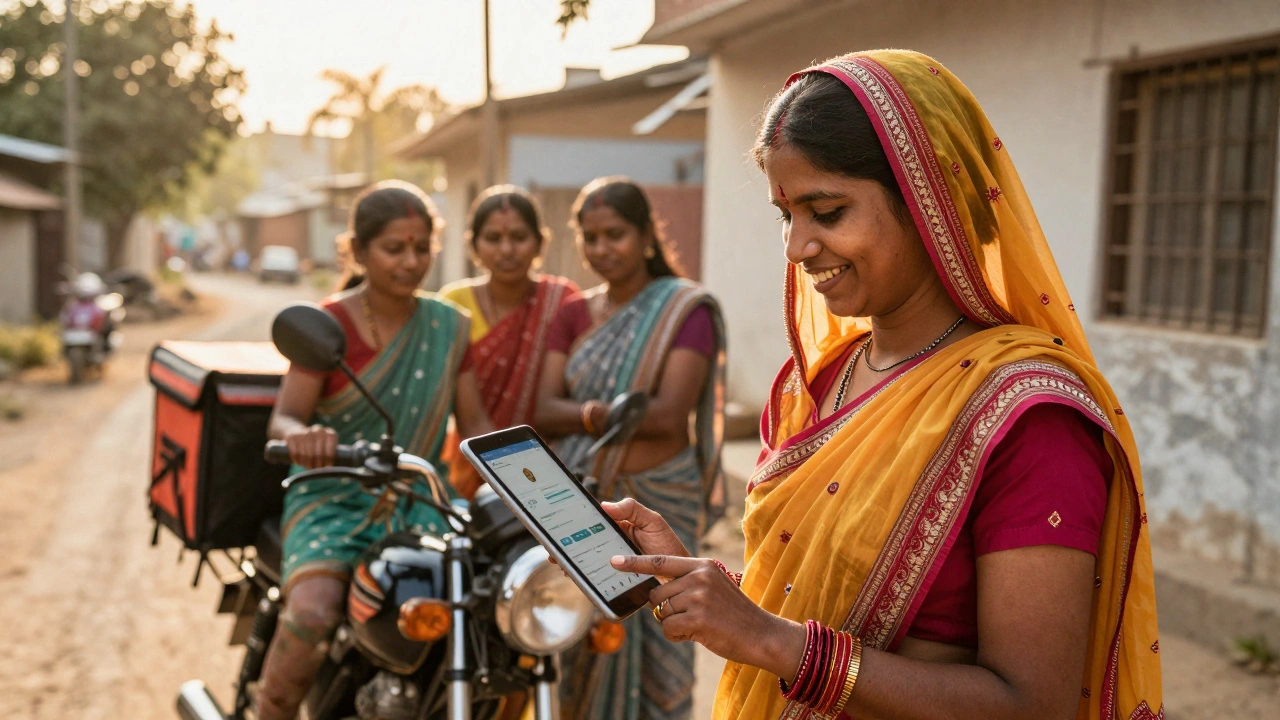
One founder I know raised ₹1.2 crore by showing a 30-second video of her app being used by 12 rural women in Madhya Pradesh. No slides. No charts. Just real users. That’s the kind of proof that moves investors.
Common mistakes that kill funding chances
- Asking for ₹5 crore too early. First-time founders should aim for ₹50 lakh to ₹2 crore. Anything bigger screams “I don’t understand how this works.”
- Not having a cap table. Investors will ask who owns what. If you can’t show this on paper, you lose credibility.
- Ignoring legal docs. A simple shareholders’ agreement and founder vesting schedule matter more than a fancy logo.
- Waiting for perfect product. No startup has a perfect product. Investors fund progress, not perfection.
One founder spent 10 months perfecting his app. By the time he pitched, his competitors had already scaled. He didn’t fail because his product was bad. He failed because he waited too long.
Next steps - what to do right now
- Calculate your burn rate. If it’s over ₹3 lakh/month, cut it in half.
- Apply to the Startup India Seed Fund Scheme. It takes 30 days. Start today.
- Reach out to 3 angel investors you’ve met. Send them a 2-line update: “We hit ₹4 lakh MRR. Would love your thoughts.”
- Sign up for one accelerator that matches your industry. Don’t apply to all of them.
- Build a 60-second video showing one real customer using your product. No voiceover. Just footage.
Funding isn’t a lottery. It’s a process. And the people who get it in India aren’t the ones with the flashiest decks. They’re the ones who showed up, stayed lean, and proved they could build something real - with or without money.
Can a startup in India get funding without a tech product?
Yes. Many Indian startups in agriculture, logistics, and education aren’t tech-first, but they’re tech-enabled. A dairy supply chain startup using WhatsApp for order tracking or a rural tutoring platform using Google Forms for assessments can still raise funding. Investors care about revenue, scalability, and team - not whether you built an app. If you solve a real problem with measurable traction, you’re fundable.
How long does it take to raise funding in India?
For pre-seed rounds, it usually takes 2 to 6 months. If you’re already generating revenue, it can be as fast as 4 weeks. But if you’re just starting, expect 4 to 8 months. The key is not rushing. Build relationships before you ask. A warm intro from a mentor cuts your timeline in half.
Do I need a co-founder to get funded?
Not always, but it helps. Over 80% of funded Indian startups have at least two founders. Investors worry about one-person teams - they burn out, miss blind spots, and struggle to scale. If you’re solo, show strong advisors, a clear division of roles, and evidence you’ve built something alone. But adding a technical or operations co-founder can double your chances.
What’s the average equity given up in a pre-seed round in India?
Most early-stage investors take between 10% and 18%. For angel investments under ₹1 crore, 12% to 15% is typical. If you’re getting a grant or loan, you give up 0%. Don’t panic if you’re asked to give more - negotiate. Ask for a valuation cap or milestone-based dilution. The best deals aren’t the ones with the highest valuation - they’re the ones with the most supportive investors.
Is crowdfunding a viable option for Indian startups?
It’s growing, but it’s not a primary funding source. Platforms like Ketto and Milaap work best for social impact projects or physical products with strong storytelling. For SaaS or B2B startups, crowdfunding rarely raises more than ₹20 lakh. It’s better used for validation - proving market demand - than as a funding strategy. Use it to build a community, not to fund payroll.