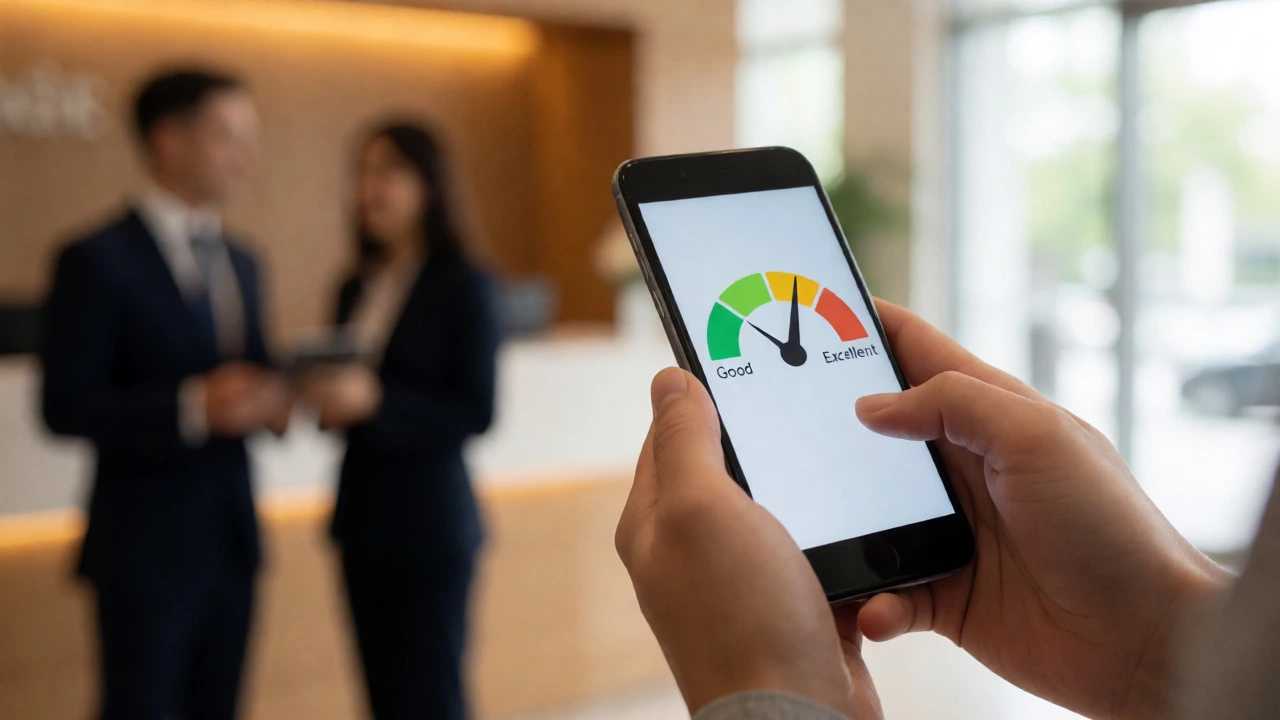
Credit Card Utilization Simulator
Discover why having multiple cards can sometimes help your score by lowering your utilization ratio. Enter your spending habits below.
Current Utilization Ratio
Why This Matters
Credit utilization accounts for 30% of your FICO score. Lowering this ratio by increasing available credit (via more cards or higher limits) often boosts your score, provided you pay balances in full.
You open your banking app and see three active credit card accounts. A little voice in your head whispers, "Is this too many? Am I ruining my score?" It’s a common worry. People hear that more debt equals worse credit, but the reality is far more nuanced. The number of cards you hold isn’t the villain here; how you manage them is.
The Myth of Card Count vs. Credit Health
Let’s clear up the biggest misunderstanding right away: having three credit cards does not inherently hurt your credit score. In fact, for many people, it helps. FICO, the company behind the most widely used credit scoring model in the United States, doesn’t penalize you simply for having multiple lines of credit. They look at behavior, not just inventory. If you pay on time and keep balances low, those three cards can actually boost your score by showing lenders you can handle responsibility across different accounts.
Think of it like driving. Owning three cars doesn’t make you a bad driver. Crashing all three because you were speeding or distracted does. Your credit score reflects your driving habits-your payment history and utilization-not the size of your garage.
How Multiple Cards Actually Impact Your Score
To understand why three cards might help or hurt, you need to know what goes into calculating your score. It’s not a black box. Here is the breakdown of the factors that matter most:
- Payment History (35%): Did you pay your bills on time? This is the heavy hitter. One missed payment on any of your three cards hurts more than having two extra cards sitting idle.
- Credit Utilization (30%): This is where having more cards often helps. Utilization is the percentage of your total available credit that you’re using. If you have one card with a $1,000 limit and spend $500, you’re at 50% utilization. That’s high. But if you have three cards with a combined $6,000 limit and still spend $500, your utilization drops to roughly 8%. Lovers love low utilization.
- Length of Credit History (15%): Older accounts are better. Opening new cards lowers your average age of accounts. If your three cards are all five years old, great. If two are brand new, your average age drops temporarily.
- Credit Mix (10%): Do you have revolving credit (cards) and installment loans (mortgage, auto)? Having diverse types of credit shows you can manage different kinds of debt.
- New Credit (10%): Hard inquiries from applying for new cards can ding your score slightly for a short time.
| Factor | Potential Benefit of 3 Cards | Potential Risk of 3 Cards |
|---|---|---|
| Utilization Ratio | Higher total limit lowers overall utilization % | Temptation to spend more across multiple cards |
| Payment History | More opportunities to build positive history | More bills to track; higher chance of missing one |
| Average Age | No change if cards are old | Drops significantly if opened recently |
| Credit Mix | Shows experience with revolving debt | Limited benefit if all are similar bank cards |
When Three Cards Are Actually Good for You
If you are disciplined, holding three cards is often a strategic move. Why? Because it gives you leverage against credit utilization. Let’s say you want to buy a laptop for $1,200. With a single card that has a $2,000 limit, that purchase puts you at 60% utilization for that month. That spike can lower your score until you pay it off. With three cards totaling $9,000 in limits, that same purchase barely moves the needle, keeping you under the recommended 30% threshold easily.
Additionally, different cards offer different perks. You might use one for travel rewards, another for cash back on groceries, and a third as a backup for emergencies. This diversification can save you money without costing you credit points, provided you set up autopay for the minimums on all three.
The Pitfalls: When More Becomes Worse
So, when does having three cards start to hurt? Usually, it’s not the number itself, but the behavior that comes with it. Here are the specific scenarios where you might see your score dip:
The Spread-Out Debt Trap: It’s easier to ignore a small balance on three separate statements than one large balance on a single statement. If you end up carrying $500 on each of your three cards, you have $1,500 in debt. If you only have one card, you’d likely feel the pinch sooner and pay it down faster. Interest charges compound quickly, and while they don’t directly hit your score, high balances do.
The Application Spree: If you got your three cards within six months, you’ve triggered multiple hard inquiries. Each inquiry can drop your score by a few points. While these effects fade after a year, the initial dip can be frustrating if you’re trying to lock in a mortgage rate.
The Forgotten Annual Fee: Some premium cards charge annual fees. If you forget about one and let it lapse into delinquency because you didn’t notice the charge, that late payment stays on your report for seven years. Tracking three due dates requires organization.
Strategies to Manage Multiple Cards Without Stress
You don’t need a spreadsheet wizardry to keep your three cards healthy. Simple systems work best. First, stagger your billing cycles. Ask your issuers to change your due dates so they fall on different weeks of the month. This prevents cash flow crunches where all three payments hit your account on the same day.
Second, automate everything. Set up autopay for at least the minimum amount on all three cards. Then, manually pay off the full balance from your checking account once a week or bi-weekly. This keeps your reported balance near zero, which looks fantastic to scoring models, while ensuring you never miss a deadline.
Third, monitor your utilization monthly. Use your bank’s app or a free service like Credit Karma to check your reported utilization. Aim to keep it below 10% if you want to maximize your score potential. Remember, utilization is calculated based on the balance reported at the end of the statement cycle, not what you owe today. So, paying early before the statement closes is a pro tip that many overlook.
Should You Close a Card?
Many people think closing an unused card simplifies their life. Be careful. Closing a card reduces your total available credit, which instantly raises your utilization ratio. For example, if you close a card with a $2,000 limit, and you have $1,000 in debt elsewhere, your utilization jumps from 20% to 25%. Plus, if that was your oldest card, closing it could shorten your credit history length. Generally, keep the card open unless it has a high annual fee that outweighs its benefits. If you must close it, cut it up but keep the account open for a year or two first to let the impact settle.

Real-World Example: Sarah’s Scenario
Sarah lives in Sydney and has three credit cards: a Visa Platinum, a Mastercard Gold, and an American Express. She spends about $2,000 a month on essentials. Her total credit limit is $10,000. Her utilization is 20%. She pays her bills automatically. Her score is 780. She feels anxious about having three cards, thinking she should downgrade to one. But her data suggests otherwise. If she closed two cards, her limit would drop to $4,000. Her $2,000 spend would put her at 50% utilization. Her score would likely drop by 20-40 points purely due to utilization changes. Keeping all three is mathematically smarter for her score.
Frequently Asked Questions
Is there a maximum number of credit cards I should have?
There is no hard limit. Most consumers have between 2 and 4 cards. Serious enthusiasts may have 10+. The key is whether you can manage the payments and avoid overspending. If you find yourself losing track of bills, you have too many.
Do I lose my credit score if I cancel a credit card?
You won't lose your entire score, but it can drop temporarily. Canceling reduces your total available credit, increasing your utilization ratio. It also removes that account's age from your average history calculation eventually. Only cancel if the annual fee is too high or you're struggling with overspending.
How long does it take for a new credit card to affect my score?
Hard inquiries appear immediately and stay for two years, though they only impact scores for about 12 months. The new account itself takes about 30-45 days to report to bureaus. Once reported, it starts affecting your average age of accounts immediately.
Is it better to have one big credit line or several smaller ones?
Several smaller lines can be safer because if one issuer lowers your limit, you aren't wiped out completely. However, one large line is easier to manage. From a scoring perspective, what matters is the total available credit relative to your spending, not how it's distributed.
Can having too many credit cards hurt my chances of getting a loan?
Lenders look at your debt-to-income ratio and total available credit. If you have maxed-out limits on three cards, some conservative lenders might worry you could rack up debt quickly. However, if your balances are low, having three cards rarely hinders loan approval.
Next Steps for Your Financial Health
If you currently have three credit cards, don’t panic. Check your current utilization rate. If it’s under 30%, you’re in good shape. Set up calendar reminders for your payment dates if you haven’t already. Consider requesting a credit limit increase on one of your existing cards instead of opening a fourth one; this boosts your available credit without adding a new hard inquiry. Keep monitoring your reports quarterly to ensure no errors are dragging your score down unnecessarily.