
High-Yield Savings Estimator
Enter your details below to see how much you really earn in a high-yield account versus a standard bank account, accounting for tax and inflation.
You stare at your bank statement. The number sits there, barely moving. You earned pennies while inflation ate away at your purchasing power. It feels like your money is asleep. You want it to work harder. Specifically, you are hunting for that magical 5% return. Is it possible? Yes. But it comes with strings attached.
High-yield savings accounts are the most common vehicle for this goal. They pay significantly more than traditional checking or basic savings accounts. In late 2026, several Australian banks and digital-only lenders offer base rates hovering around 4.5% to 5.0%. However, hitting a flat 5% usually requires jumping through specific hoops. These aren't just "set and forget" pots of cash. They often demand monthly deposits, transaction activity, or capped balance limits. Understanding these mechanics saves you from disappointment later.
The Reality Check: Why 5% Isn't Everywhere
Banks don't give away high interest out of kindness. They lend your money out at higher rates. If they pay you 5%, they likely charge borrowers 7% or more. This spread covers their overheads and profit. Traditional brick-and-mortar banks have high operational costs. Branches, staff, and legacy systems eat into margins. That's why big four banks often lag behind in base rates. Digital-first banks and neobanks have lower overheads. They can afford to pass more value back to you. But even they have limits. A guaranteed, uncapped 5% rate without conditions is rare in the current economic climate. Most offers involve trade-offs between liquidity, flexibility, and maximum yield.
Option 1: Cash Management Accounts (CMAs)
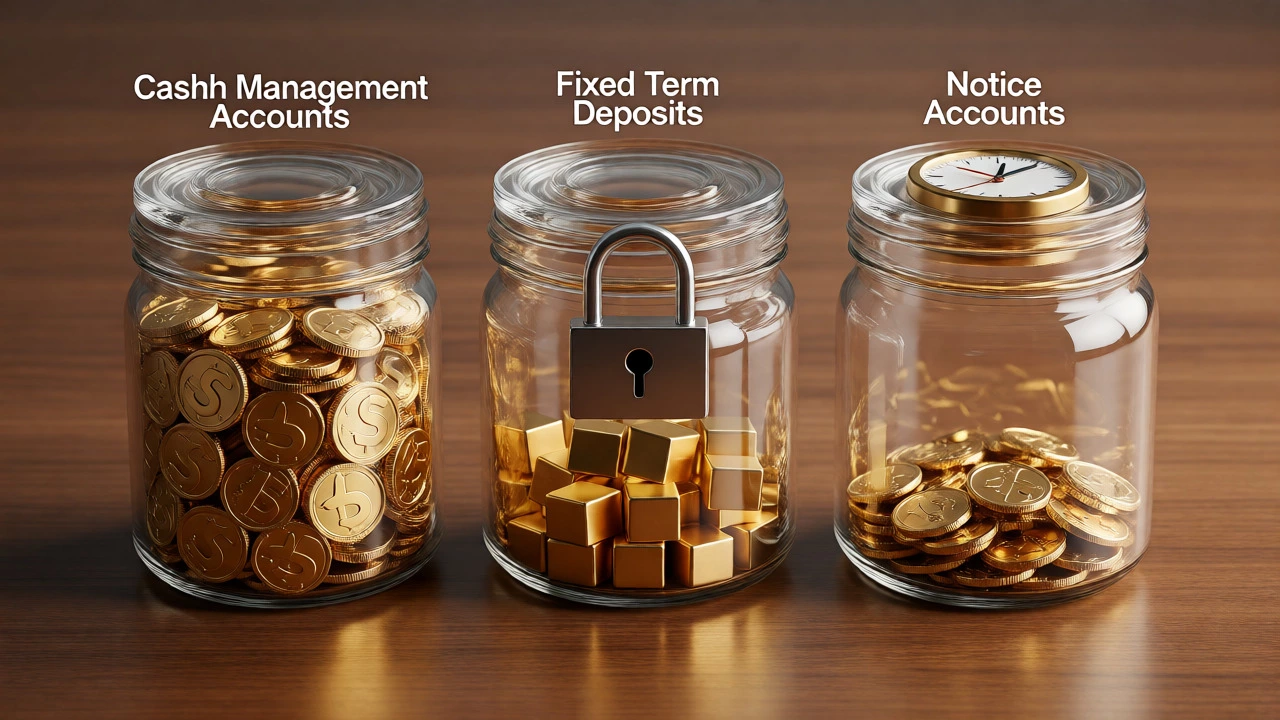
Cash Management Accounts function like hybrid savings-checking tools. They offer debit cards, instant access, and competitive interest. Unlike standard savings accounts, CMAs often don't require you to open a separate everyday banking account. This simplicity appeals to many. Providers like Up Bank, Revolut, and various credit unions compete fiercely here. As of November 2026, some CMAs offer tiered rates. You might get 4.8% on the first $50,000, dropping to 4.0% above that threshold. Or, you might need to spend $250 monthly via card to unlock the top tier. Always read the fine print on "bonus" conditions. Missing one transaction can drop your rate by half. That stings when you're calculating annual returns.
| Product Type | Typical Base Rate | Access Speed | Key Conditions |
|---|---|---|---|
| Cash Management Account | 4.5% - 5.0% | Instant | Monthly deposit/spend requirements |
| Fixed Term Deposit | 4.8% - 5.2% | Liquidated only at maturity | Lock-in period (3-12 months) |
| Notice Account | 4.6% - 5.1% | 31-day notice required | No withdrawals during notice period |
| Traditional Savings | 0.05% - 1.5% | Instant | None |
Option 2: Fixed Term Deposits
If you don't need immediate access to your cash, look at Fixed Term Deposits. These products lock your money away for a set period. In exchange, the bank guarantees a specific interest rate. For terms ranging from six months to two years, rates near 5% are quite accessible in 2026. The catch? Liquidity. If you break the term early, you lose a significant portion of the accrued interest. Often, you forfeit three months' worth of interest as a penalty. This makes them unsuitable for emergency funds. Use them for goals with clear timelines, like saving for a car down payment or a holiday booked six months out. The certainty of the return provides peace of mind, shielding you from falling variable rates.
Option 3: Notice Accounts
Notice accounts sit somewhere between savings and term deposits. They offer higher rates than standard savings because they restrict your withdrawal rights. Typically, you must provide 31 days' written notice before accessing your funds. During those 31 days, you cannot withdraw any money without losing interest for that month. Some providers allow partial withdrawals after the notice period expires. Others require full closure of the notice tranche. This structure suits people who plan large expenses in advance. If you know you'll pay school fees or insurance premiums next month, start the notice clock now. You earn a premium rate while waiting, rather than letting cash idle in a low-interest checking account.
Hidden Costs and Tax Implications
A 5% gross return isn't a 5% net gain. Interest income is taxable. In Australia, this interest adds to your assessable income. If you fall into a higher tax bracket, the government takes a significant slice. For someone earning over $45,000 annually, the marginal tax rate plus Medicare levy means you keep roughly 68 cents of every dollar earned in interest. So, a nominal 5% return translates to about 3.4% after tax. Compare this against inflation. If inflation runs at 3%, your real purchasing power grows by only 0.4%. It's positive, but not spectacular. Don't let the headline number fool you. Calculate your after-tax, after-inflation return to understand the true value.

How to Spot a Good Deal
Not all 5% offers are equal. Scrutinize the following attributes before transferring your hard-earned cash:
- Cap Limits: Does the high rate apply to all your money, or just the first $100,000? Many banks cap bonus rates to encourage smaller balances.
- Introductory Periods: Is the rate locked in for life, or does it revert to a base rate after 6 or 12 months? Read the renewal terms carefully.
- Accessibility Fees: Are there monthly account keeping fees? A $10 monthly fee eats up $120 a year, which might negate the extra interest on smaller balances.
- Transfer Speeds: How long does it take to move money out? Instant transfers are convenient; T+1 or T+2 delays can be problematic if you need urgent cash.
Strategic Allocation: Don't Put All Eggs in One Basket
Should you put everything into a 5% product? Probably not. Diversification reduces risk. Keep an emergency fund in a highly liquid account, even if it pays slightly less. Aim for 3-6 months of living expenses here. Access matters more than yield in a crisis. Place medium-term savings (1-3 years) in fixed terms or notice accounts to lock in rates. Long-term surplus cash might belong in investment vehicles like ETFs or managed funds, where potential returns exceed 5% over time, albeit with market volatility. By segmenting your money based on time horizon and accessibility needs, you optimize both safety and growth.
What Happens When Rates Drop?
Interest rates fluctuate with central bank policies. If the Reserve Bank cuts rates, variable savings rates usually follow quickly. Fixed terms protect you from this decline. If you lock in 5% for 12 months and the market drops to 3.5%, you still receive 5%. Conversely, if rates rise, you're stuck with a lower return until the term ends. This is the cost of certainty. Monitor economic indicators. If inflation cools and growth slows, expect rate cuts. Locking in longer terms becomes attractive then. If the economy heats up, stay flexible with variable accounts to capture rising yields. There is no crystal ball, but awareness helps you position your portfolio better.
Is my money safe in a high-interest bank account?
Yes, provided the institution is an Authorized Deposit-taking Institution (ADI) regulated by APRA. Under the Financial Claims Scheme, deposits up to $250,000 per person per ADI are government-guaranteed. This applies to savings accounts, term deposits, and notice accounts alike. Digital banks and credit unions also participate if they hold ADI status. Always verify the bank's license status on the APRA website before depositing large sums.
Do I have to pay tax on 5% interest?
Absolutely. Interest income is considered ordinary income by the Australian Taxation Office (ATO). It is added to your other earnings, such as wages and rental income, to determine your total taxable income. You will receive a Tax File Number (TFN) declaration form when opening the account. Providing your TFN ensures tax is withheld at the correct rate. Without it, the highest marginal withholding tax applies, which could result in a refund later or a bill depending on your overall tax situation.
Can I lose money in a savings account?
In nominal terms, no. Your principal amount is protected up to the FCS limit. However, in real terms, yes. If inflation exceeds your interest rate, your purchasing power decreases. For example, if you earn 5% but inflation is 6%, you effectively lose 1% of buying power annually. Additionally, breaking a fixed term early can result in interest penalties, reducing the total amount returned compared to what was promised.
Are online-only banks safer than traditional banks?
Safety depends on regulation, not physical presence. Online-only banks operate under the same strict prudential standards as traditional banks. They use advanced encryption and multi-factor authentication to secure data. Many actually offer superior fraud detection tools due to modern tech stacks. The primary difference is customer service channels. If you prefer face-to-face interactions, a branch-based bank might feel safer psychologically, even if the financial security is identical.
What happens if I miss a condition for the bonus rate?
You typically revert to the base interest rate for that month. For instance, if the bonus is 5% and the base is 1.5%, missing a $250 deposit requirement means you earn 1.5% instead. The penalty usually resets the following month if you meet conditions again. Some banks offer grace periods or automatic waiver options for loyal customers, but never assume. Set calendar reminders for deposit deadlines to avoid unnecessary interest loss.