
GST Penalty Calculator
Calculate Your GST Penalties
Enter details to calculate penalties for late GST filings. This tool helps you avoid costly errors in your GST compliance.
Quick Summary
Here's what you need to know about the GST filing process in India:
- The Goods and Services Tax (GST) is a destination-based tax introduced in India on July 1, 2017. It replaced over a dozen different indirect taxes like VAT, excise duty, and service tax. GST is collected at each stage of the supply chain, with credits for taxes paid on previous stages.
- You must file specific returns like GSTR-1 for sales and GSTR-3B for summary tax payments.
- Missing deadlines can lead to penalties up to ₹5,000 per month and interest on unpaid taxes.
- Reconciling invoices between buyer and seller is critical to claim correct Input Tax Credit (ITC).
- Using accounting software like TallyPrime or ClearTax automates much of the filing process.
What is GST?
Goods and Services Tax (GST) is a comprehensive indirect tax introduced in India on July 1, 2017. It replaced over a dozen different taxes including Value Added Tax (VAT), excise duty, and service tax. GST is a destination-based tax, meaning it's collected at the point of consumption rather than production.
In practice, when a business sells goods or services, it charges GST to customers. The business then pays the government the difference between the GST it collected and what it paid on its own purchases. This avoids the cascading effect of taxes on taxes.
For example, a manufacturer sells goods to a wholesaler. The manufacturer charges GST on the sale. The wholesaler pays that tax but can claim it as Input Tax Credit (ITC) when they sell to a retailer. The retailer then pays GST on their sale to customers but can claim ITC on what they paid to the wholesaler. This continues until the final consumer, who can't claim ITC.
Step 1: GST Registration
Before you can file GST returns, your business must be registered. You need to register if your annual turnover exceeds ₹20 lakh (₹10 lakh for special category states like Uttarakhand or Himachal Pradesh). Certain businesses must register regardless of turnover, like e-commerce operators or those involved in interstate supplies.
Registration happens through the GST portal (www.gst.gov.in). You'll need documents like your PAN card, proof of business address, bank account details, and identity proof of authorized signatory.
After submitting Form GST REG-01, you'll receive a GST Identification Number (GSTIN) within 6 working days. This 15-digit code is your business's unique identifier for all GST-related activities.
Step 2: Filing GSTR-1
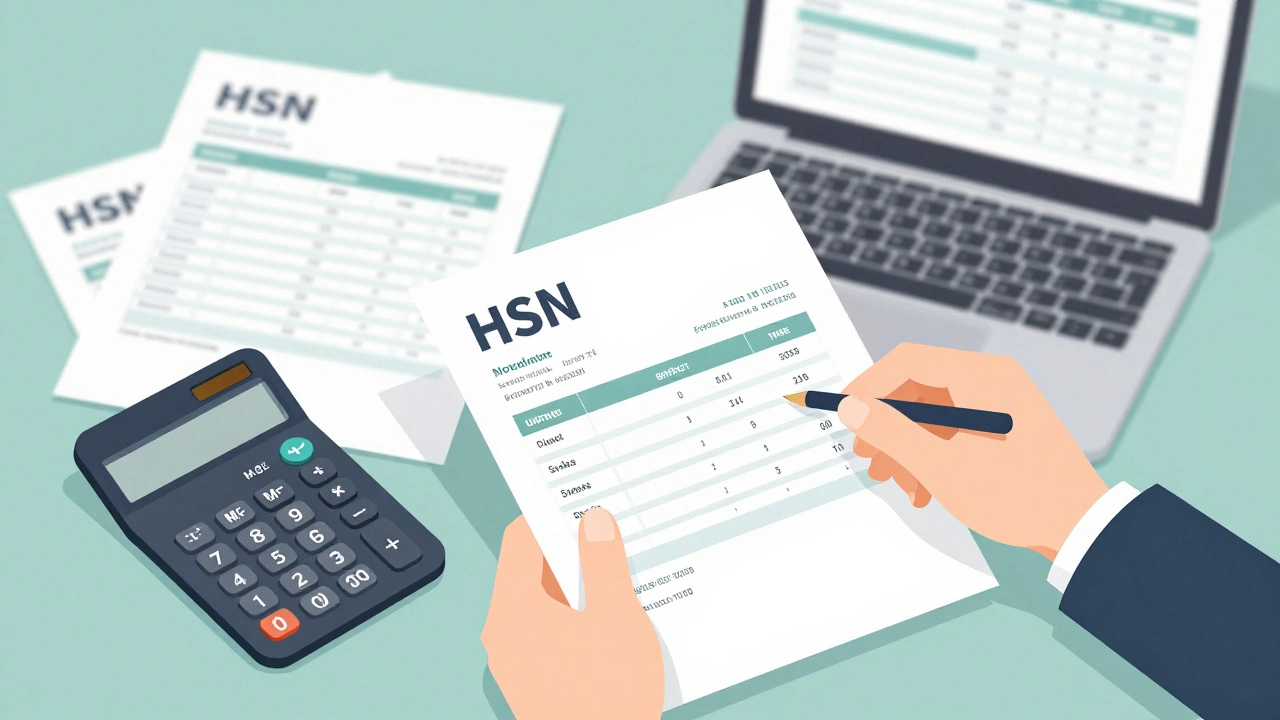
GSTR-1 is your monthly return for outward supplies (sales). You must file this by the 11th of the next month. This return includes detailed information about all your sales transactions.
For each sale, you report:
- Invoice number and date
- Customer's GSTIN (if registered)
- HSN code for goods or SAC code for services
- Taxable value and GST amount
Example: A clothing store selling shirts must report each sale with the correct HSN code (6205 for men's shirts). If the customer is registered, their GSTIN must be included. If not, it's marked as B2C (business-to-consumer).
Missing even one invoice can cause mismatches later. Always keep accurate records of all sales.
Step 3: Filing GSTR-3B
GSTR-3B is a summary return filed by the 20th of the next month. It's simpler than GSTR-1 but critical for paying taxes.
Here, you report:
- Total sales (including B2B and B2C)
- Total Input Tax Credit (ITC) claimed
- Net GST liability (tax payable after adjusting ITC)
- Amount paid towards GST
This return must match your GSTR-1 data. If there's a mismatch, the GST department will flag it. For example, if you reported ₹50,000 in sales in GSTR-1 but only ₹45,000 in GSTR-3B, you'll need to explain the difference.
Remember: GSTR-3B is where you actually pay the tax due. Late payment incurs interest at 18% per annum.
Step 4: Reconciling Invoices
After filing GSTR-1, your buyers see your sales in their GSTR-2A (auto-populated from your filings). They use this to claim Input Tax Credit. But mismatches can happen if you miss reporting an invoice or enter wrong details.
Always check GSTR-2A regularly. If a buyer reports a mismatch, you'll need to correct your GSTR-1 in the next month. For example, if you forgot to include a ₹10,000 sale in GSTR-1, the buyer can't claim ITC for it. Correcting this in the next month's return fixes the issue.
Also, if you're a buyer, check your GSTR-2B (for ITC claims). This form shows eligible credits based on suppliers' filings. Missing invoices here means lost tax savings.
Step 5: Annual Return (GSTR-9)
Every year, you must file GSTR-9 by December 31 of the next financial year. This return summarizes all your monthly/quarterly filings for the year.
It includes:
- Total turnover
- Breakdown of supplies (B2B, B2C, exports)
- ITC claimed
- Reconciliation of taxes paid vs. liabilities
For example, a small business with ₹50 lakh annual turnover must file GSTR-9 by December 31, 2026. This return ensures all monthly returns were accurate and complete.
Failure to file GSTR-9 on time attracts a penalty of ₹200 per day (₹100 CGST + ₹100 SGST), up to 0.25% of turnover.
Common Mistakes to Avoid
Here are errors that cost businesses time and money:
- Missing deadlines: Late filing of GSTR-1 or GSTR-3B incurs penalties. For GSTR-3B, it's ₹50 per day (₹25 CGST + ₹25 SGST) for delayed filing, plus interest on unpaid tax.
- Incorrect HSN/SAC codes: Using wrong codes leads to mismatches. For example, reporting a smartphone under HSN 8517 (telecom equipment) instead of 8517 (mobile phones) can cause issues.
- Not reconciling invoices: If your supplier didn't file GSTR-1, you can't claim ITC for that purchase. Always check GSTR-2A before filing GSTR-3B.
- Overclaiming ITC: Claiming credits for ineligible items (like personal expenses) leads to demand notices from the tax department.
These mistakes can snowball. One error in GSTR-1 affects GSTR-3B, which affects annual return. Stay organized!
Tools to Simplify GST Filing
Manual GST filing is time-consuming. Here are tools that help:
- TallyPrime: Popular accounting software that auto-generates GST returns. It syncs with your sales data and ensures correct HSN codes.
- ClearTax: An online platform that guides you through each filing step. It also offers real-time updates on GST rules.
- Zoho Books: Cloud-based software that automates GST calculations and return filing. It integrates with your bank accounts for easy reconciliation.
These tools reduce manual errors and save hours each month. For small businesses, they're essential for compliance without hiring experts.
Frequently Asked Questions
What is the penalty for late GST filing?
For GSTR-3B, late filing attracts a penalty of ₹50 per day (₹25 CGST + ₹25 SGST), up to ₹5,000. For other returns like GSTR-1, it's ₹200 per day. Additionally, interest of 18% per annum applies on unpaid tax. Always file on time to avoid these costs.
Can I file GST returns without a GSTIN?
No, you must have a valid GSTIN before filing any returns. If your business qualifies for registration (turnover over ₹20 lakh), you need to apply for GSTIN first through the GST portal. Without it, you can't report sales or claim Input Tax Credit.
What is Input Tax Credit (ITC) in GST?
ITC allows businesses to reduce their tax liability by claiming credit for GST paid on purchases. For example, if you pay ₹5,000 GST on raw materials, you can deduct this from the GST you collect on sales. This prevents double taxation and ensures tax is only on value addition.
How often do I need to file GST returns?
Most businesses file monthly returns (GSTR-1 and GSTR-3B). However, small businesses under the Composition Scheme file quarterly returns. Always check your GSTIN status-your filing frequency depends on your turnover and scheme eligibility.
What happens if GSTR-1 and GSTR-3B don't match?
Mismatched returns trigger a notice from the GST department. You'll need to reconcile the differences-usually by correcting GSTR-1 in the next month's filing. For example, if GSTR-3B shows higher sales than GSTR-1, you must adjust the figures. Ignoring this can lead to penalties and interest on the discrepancy.