Tax Refund Processing Time Calculator
Refund Estimator
Estimated Refund Date
Processing Time: 0-10 days
Refund Date: January 28, 2025
Based on IRS processing guidelines. Note: Claims for Earned Income Tax Credit (EITC) or Additional Child Tax Credit (ACTC) require the IRS to hold refunds until at least February 15.
If you filed your 2024 tax return and are waiting for your refund, you might have heard about an early tax refund. But what does that really mean? Is there a special program that pays you sooner? And if so, how do you get it? The short answer: there’s no official government program called an ‘early tax refund.’ What people are talking about is the normal speed of processing refunds - and how some taxpayers get theirs faster than others.
When Does the IRS Start Processing 2024 Tax Returns?
The IRS doesn’t start processing paper or electronic tax returns until mid-January each year. For the 2024 tax season, that meant January 27, 2025. That’s when they began accepting and processing returns for income earned in 2024. If you filed before that date, your return was held in a queue until processing started.
So if you filed your return electronically with direct deposit on January 28, 2025, you were already in the first wave of filers. That’s the real ‘early’ advantage - filing early, not getting a special early refund.
How Fast Do Most People Get Their Refunds?
Most taxpayers who file electronically and choose direct deposit get their refunds in under 21 days. The IRS says 9 out of 10 refunds are issued within that window. For many, it’s even faster - sometimes under 10 days.
Here’s what typically happens after you file:
- IRS receives your return (usually within 24 hours of e-filing)
- They check for errors, match your W-2s, and verify your identity
- If everything looks good, they approve the refund
- Money is sent to your bank account via direct deposit
That whole process can take as little as 5-8 days if your return is simple and there are no red flags. If you claimed the Earned Income Tax Credit (EITC) or Additional Child Tax Credit (ACTC), federal law requires the IRS to hold those refunds until at least February 15 - even if your return was processed earlier.
Why Do Some People Wait Longer?
Not everyone gets their refund quickly. Delays happen for a few common reasons:
- Paper filings - These take 6-8 weeks to process. E-filing cuts that time in half.
- Errors on your return - Mismatched Social Security numbers, wrong income amounts, or missing forms trigger manual review.
- Claiming EITC or ACTC - By law, the IRS must hold these refunds until mid-February to prevent fraud.
- Identity verification issues - If the IRS can’t confirm you’re who you say you are, they’ll send you letters asking for documents.
- Amended returns - If you filed an amended return (Form 1040-X), those take up to 16 weeks.
There’s no magic shortcut. If your refund is delayed, it’s almost always because of something on your end - not because the IRS is slow.

Who Gets Refunds the Fastest?
These taxpayers typically get their money in under 10 days:
- Those who e-filed with direct deposit
- Those who didn’t claim EITC or ACTC
- Those with simple returns (W-2 only, no itemized deductions)
- Those who didn’t have any mismatches or missing documents
For example, a single taxpayer with one W-2, no dependents, and no side income who filed on January 28, 2025, likely got their refund by February 7, 2025. That’s the closest thing to an ‘early tax refund’ - just good preparation.
Can You Speed Up Your Refund?
You can’t pay the IRS for faster processing - that’s a scam. But you can take real steps to get your refund as quickly as possible:
- E-file your return - Never mail a paper return if you can help it.
- Choose direct deposit - This is faster than a paper check. The IRS doesn’t mail checks for refunds unless you ask for them.
- Double-check your numbers - One wrong digit on your Social Security number or bank account can delay everything.
- Use IRS Free File - If your income was under $79,000 in 2024, you qualify for free, guided tax software from the IRS.
- Don’t file an amended return unless necessary - Fixing mistakes after filing adds months to the process.
There’s no ‘early refund’ button. But if you do these five things, you’ll be in the top 10% of filers for speed.
How to Track Your Refund
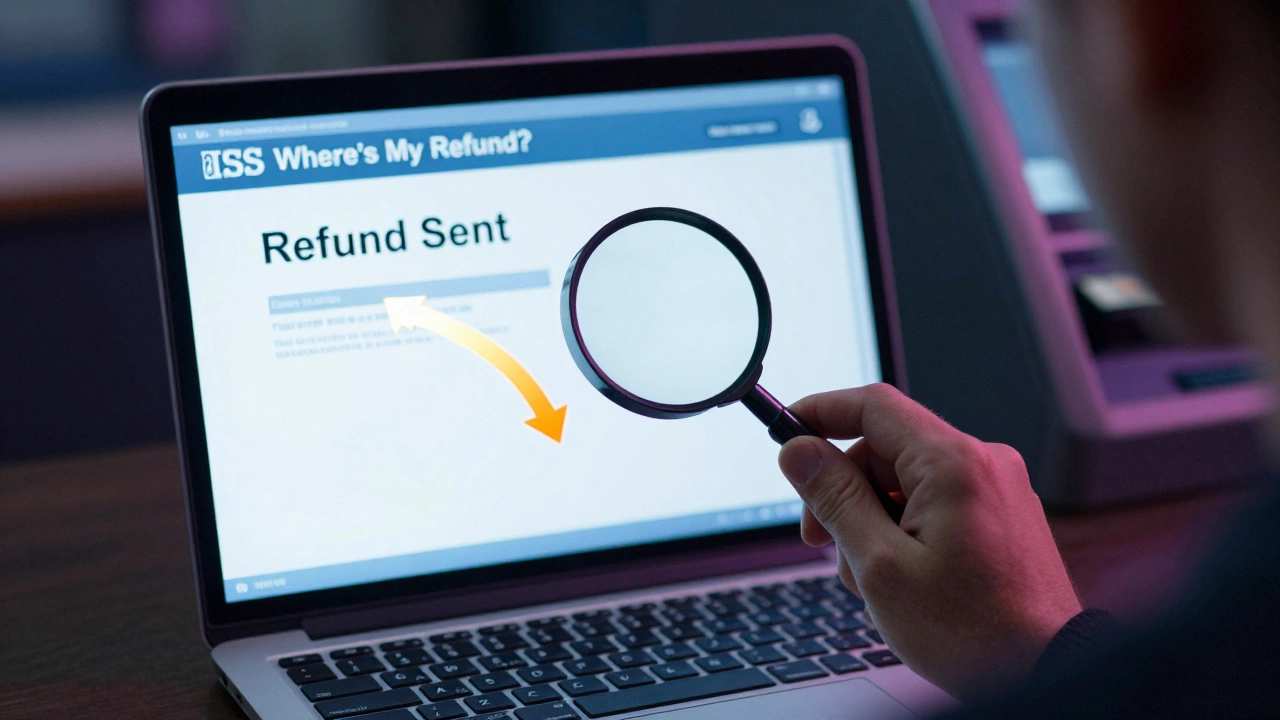
The IRS has a free tool called Where’s My Refund? You can check your refund status 24 hours after e-filing. All you need is your Social Security number, filing status, and the exact refund amount you’re expecting.
Here’s what the status means:
- Return Received - The IRS has your return and is processing it.
- Refund Approved - Your refund has been approved and is being sent.
- Refund Sent - The money is on its way to your bank.
Don’t call the IRS unless it’s been more than 21 days since you e-filed and your status still says ‘Return Received.’ They won’t give you any more info than the website does.
What About State Refunds?
Your state tax refund works separately from your federal refund. Most states process returns just as fast as the IRS - sometimes faster. For example, California and New York often issue refunds in 7-14 days for e-filed returns with direct deposit.
Check your state’s tax website for their refund tracker. Don’t assume your state refund will come at the same time as your federal one.
What If You Didn’t Get Your Refund?
If it’s been more than 21 days and you still haven’t gotten your refund, here’s what to do:
- Check Where’s My Refund? again - maybe the status changed.
- Look for a letter from the IRS - they may have sent you a request for more info.
- Call the IRS only if you’ve waited over 21 days and the tool still shows ‘Return Received’ - and you’re sure your return was correct.
Don’t file another return. Don’t pay anyone to ‘expedite’ your refund. And don’t panic. Most delays are fixable - you just need to respond to what the IRS asks for.
What’s the Biggest Myth About Early Tax Refunds?
The biggest myth is that some companies or tax preparers can get you your refund faster than others. They can’t. If someone says they can give you your refund in 48 hours, they’re either lying or trying to sell you a refund anticipation loan - a high-interest loan against your future refund.
These loans often come with fees of $50-$150 and interest rates over 100%. You end up paying more just to get your own money a few days earlier. It’s not worth it.
Real speed comes from filing early, filing right, and letting the system work - not from paying extra.