FDIC Insurance: What It Covers and How It Protects Your Money
When you put money in a bank, you expect it to be there when you need it. That’s where FDIC insurance, a U.S. government program that protects deposits in case a bank fails. Also known as Federal Deposit Insurance Corporation coverage, it’s the reason millions of Americans feel safe keeping their savings in banks instead of under the mattress. The FDIC doesn’t just hand out promises—it backs up every dollar up to $250,000 per depositor, per insured bank, for each account ownership category. That means if your bank closes tomorrow, your checking account, savings account, or certificate of deposit (CD) is still yours.
But not everything is covered. FDIC insurance only applies to deposit accounts—things like savings, checking, money market accounts, and CDs. It doesn’t cover stocks, bonds, mutual funds, crypto, or life insurance policies, even if you bought them through the bank. And if you have more than $250,000 in one bank under the same name, the extra amount isn’t protected. That’s why people with larger balances often spread their money across multiple banks or use different account types (like joint accounts or trust accounts) to stay within limits.
What makes FDIC insurance so powerful is that it’s backed by the full faith and credit of the U.S. government. Since 1933, no one has ever lost a single dollar of insured deposits. Even during the 2008 financial crisis or the 2023 bank failures, the FDIC stepped in fast—paying out within days, not months. You don’t need to apply for it. If your bank is FDIC-insured (and most are), you’re automatically covered. Just look for the official FDIC sign at the branch or check their website using the FDIC’s BankFind tool.
Some people confuse FDIC with SIPC, which protects brokerage accounts. They’re not the same. SIPC covers you if your broker goes under, but only for missing securities—not market losses. FDIC is simpler: if the bank closes, your cash is safe. That’s why, for everyday savers, FDIC insurance is one of the most reliable tools in personal finance. It doesn’t earn interest. It doesn’t grow your money. But it keeps your money from disappearing when things go wrong.
You’ll find posts here that dig into high-yield savings accounts, fixed deposits, and how to choose safe banks—many of which rely on FDIC protection. Whether you’re comparing interest rates or wondering if your money is truly secure, knowing how FDIC insurance works is the first step. The posts below show real examples of how people use this protection to build smarter, safer financial habits. You don’t need to be an expert to use it. You just need to know it exists—and how to make sure you’re covered.
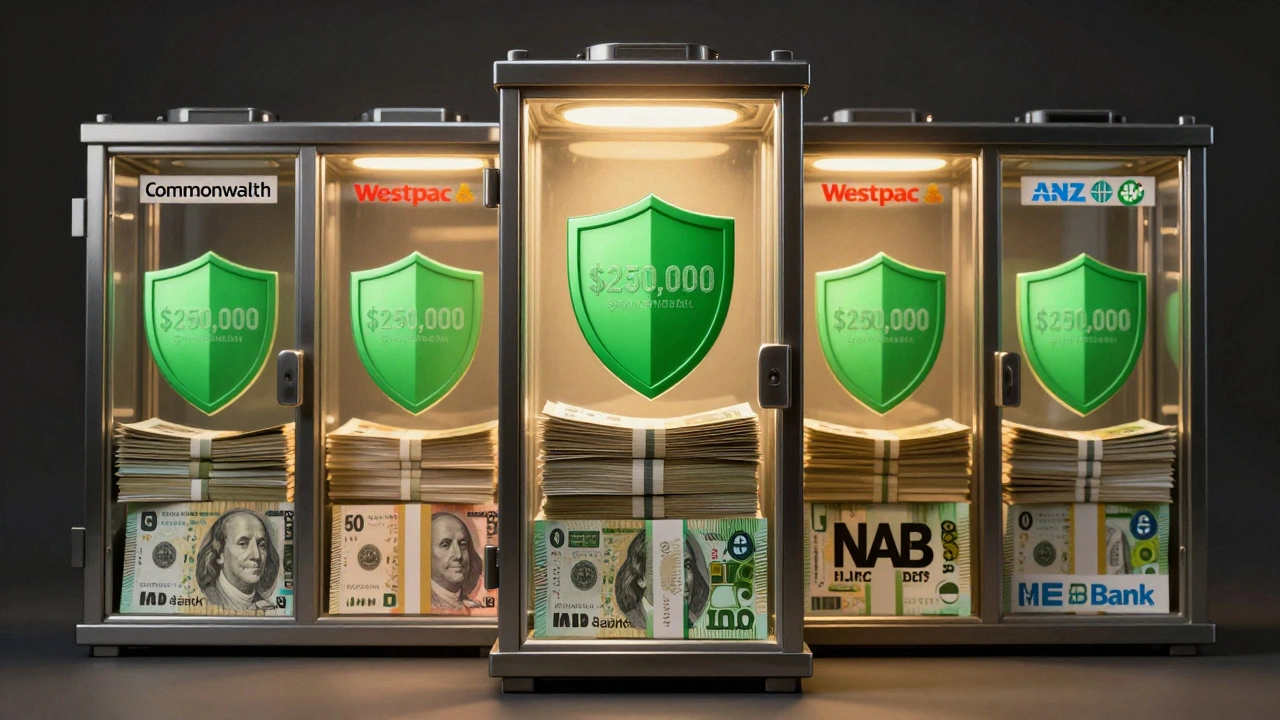
Should I Split My Savings Between Banks?
Learn why splitting your savings between Australian banks is essential if you have more than $250,000. Understand how the Financial Claims Scheme works and how to protect your money without sacrificing interest rates.
View more
Is Capital One Savings Account Safe? 2025 Full Review
Find out if a Capital One savings account is safe in 2025-covering FDIC insurance, regulator oversight, cyber‑security, and how it compares to other top online banks.
View more
Do Millionaires Keep Their Money in One Bank? A Deep Dive into Wealth Banking Strategies
Explore whether millionaires stick to a single bank or spread their wealth. Learn about diversification, private banking, offshore accounts, and risk management in a clear, practical guide.
View more