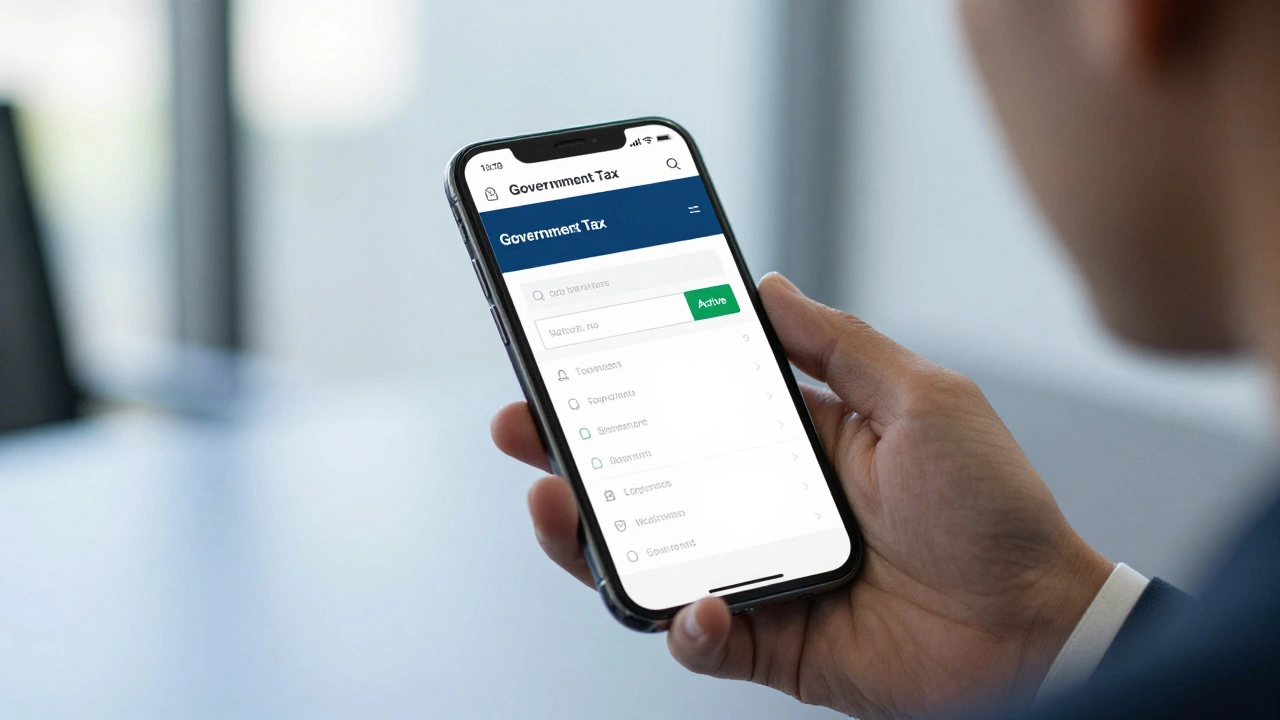
GSTIN Structure Validator & Decoder
Enter a 15-digit GSTIN below to instantly validate its format and decode the embedded information.
You just signed a contract with a new supplier. They promise great prices and fast delivery. But before you cut that first check, you need to answer one critical question: Is this vendor actually registered for Goods and Services Tax (GST)? If they aren’t, you could be looking at rejected input tax credits, hefty penalties, or even legal trouble down the line. In India’s current tax landscape, verifying a vendor’s GST status isn’t just good practice-it’s mandatory for business survival.
Many businesses assume that if a vendor provides a GSTIN (Goods and Services Tax Identification Number), they are compliant. That assumption is dangerous. A number can exist on paper while the account remains inactive, suspended, or cancelled. The difference between a valid, active GST registration and a dormant one is often invisible until your annual audit hits.
The Quick Way: Using the Official GST Portal
The most reliable method to verify a vendor’s status is through the government’s official GST Portal (gst.gov.in). This platform holds the single source of truth for all taxpayer data in India. You don’t need to log in to perform a basic search; the public search feature is designed specifically for this purpose.
Here is how you do it correctly:
- Navigate to www.gst.gov.in.
- Look for the menu option labeled "Services" at the top right corner.
- Select "Public Utilities" from the dropdown menu.
- Click on "Search Taxpayer."
- In the search box, enter the vendor’s GSTIN (the 15-digit number). If you don’t have the number, you can try searching by their legal name, but this is less precise due to common naming overlaps.
- Enter the CAPTCHA code and click "Search."
If the vendor is registered, the system will display a card with their details. Pay close attention to the Status column. It should read "Active." If it says "Cancelled," "Suspended," or "Under Process," you have a problem. An "Active" status means they are currently liable to collect GST and file returns. However, being active doesn't guarantee they have filed their recent returns-it only confirms their registration exists.
Decoding the GSTIN: What the Numbers Tell You
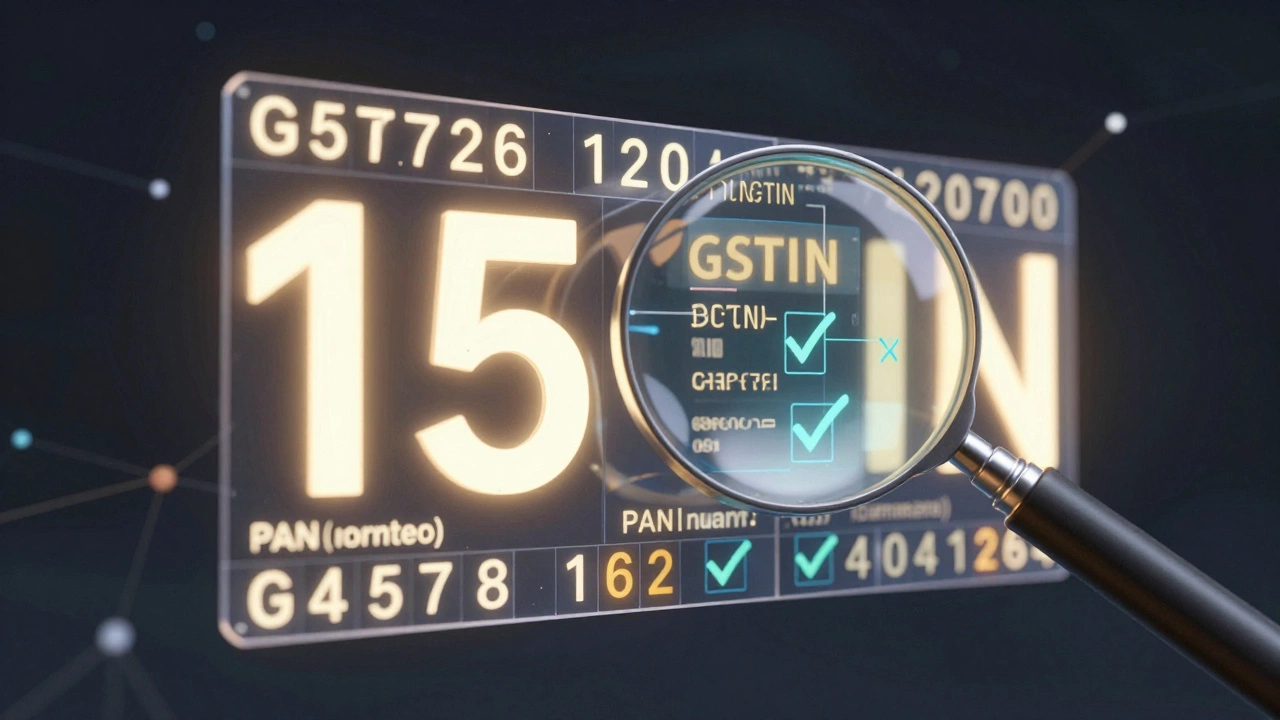
Before you even hit search, you can validate the format of the GSTIN. This 15-digit alphanumeric code follows a strict structure defined by the Central Board of Indirect Taxes and Customs (CBIC). If the number doesn’t fit this pattern, it’s fake.
| Digits | Meaning | Example |
|---|---|---|
| 1-2 | State Code (as per ISO 3166-2) | 27 (Maharashtra) |
| 3-12 | PAN of the Entity | AABCU9608E |
| 13 | Entity Number (for multiple registrations in same state) | 1 |
| 14 | Always 'Z' | Z |
| 15 | Check Digit (Alphanumeric) | 5 |
Notice digits 3 through 12? These must match the vendor’s Permanent Account Number (PAN). If the PAN embedded in the GSTIN does not match the PAN on their invoice or company profile, stop immediately. This is a major red flag for fraud. The 13th digit indicates if the business has multiple locations within the same state. For most small vendors, this will be '1'.
Checking Compliance Rating and Return Filing History
Knowing a vendor is registered is step one. Knowing they are compliant is step two. A vendor can have an active GSTIN but fail to file their GSTR-1 (sales) or GSTR-3B (summary) returns. If they don’t file, you cannot claim Input Tax Credit (ITC) against purchases made from them. Your money gets stuck in the tax system.
To check this deeper layer of compliance, you need to look at their Compliance Rating. While the public search shows basic status, detailed filing history is sometimes restricted to logged-in users or requires specific permissions. However, there are indicators:
- Last Filing Date: On the public search result, some interfaces show the date of the last return filed. If it’s older than three months, investigate further.
- Annual Turnover Disclosure: Registered entities disclose turnover bands. If a vendor claims high volume but falls into a low turnover band, their financials may not support their operational capacity.
For a more robust check, many businesses use third-party APIs that aggregate data from the GSTN (Goods and Services Tax Network). These tools can pull up the last 12 months of filing consistency. If a vendor has missed filings in 2 out of the last 6 months, their reliability is questionable. Consistent filing is a proxy for financial health and administrative competence.
Red Flags: Signs of a Non-Compliant Vendor
Sometimes the digital checks come back clean, but other signs point to trouble. Be wary of these scenarios:
1. Mismatched Addresses: Compare the address listed on the GST portal with the address on their invoice and their physical office. If the GST registration lists a residential apartment in a different city while the invoice comes from a commercial complex in Mumbai, ask questions. GST registrations are location-specific. A vendor operating from a place different from their registered premises might be using a fake registration.
2. Round-Figure Invoices: Legitimate businesses calculate taxes precisely. If you receive invoices where the total amount is a suspiciously round number (e.g., exactly ₹1,00,000 including tax) without a clear breakdown of CGST, SGST, or IGST, it suggests the invoice was created manually without proper accounting software. This often leads to errors in your own books.
3. Reluctance to Share Details: If a vendor hesitates to provide their GSTIN or claims they are "in the process of getting it," do not proceed with taxable supplies. Under the Reverse Charge Mechanism (RCM), if you buy from an unregistered dealer, you might be liable to pay the GST yourself. This eats into your margins unexpectedly.
Automating Verification for High-Volume Buyers
If you deal with hundreds of vendors, manual checking is impossible. You need automation. Most modern ERP systems like Tally, SAP, or Oracle integrate with GST validation services. Here is how to set up a robust workflow:
- Onboarding Gate: Make GSTIN verification a mandatory field in your vendor onboarding form. Use an API integration that validates the GSTIN in real-time as the user types it.
- Periodic Audits: Set a quarterly trigger to re-verify the status of all active vendors. Registrations can be cancelled mid-year due to non-filing or regulatory action. A one-time check is not enough.
- Invoice Matching: Configure your accounting software to reject invoices where the GSTIN does not match the name on the record. This prevents data entry errors that lead to ITC mismatches during reconciliation.
Using APIs from providers like ClearTax, Zoho Books, or RazorpayX can automate this. These services query the GSTN database directly and return a JSON response indicating validity, status, and business type. This reduces human error and ensures you never pay a vendor who isn’t legally compliant.

What Happens If You Buy From an Unregistered Vendor?
The consequences of overlooking this step are financial and operational. First, you lose the ability to claim Input Tax Credit. If you paid ₹18 in GST on a purchase, that money is gone. You cannot offset it against your output liability. Second, under Section 66 of the CGST Act, if you knowingly purchase goods/services from an unregistered person when you were required to buy from a registered one, you may face penalties. Third, during an audit, discrepancies between your purchase register and the vendor’s sales register (which doesn’t exist if they’re unregistered) will raise flags. The tax officer will demand proof of payment and legitimacy, which becomes difficult to provide if the vendor disappears.
Additionally, some industries have specific rules. For example, if you are in manufacturing, buying raw materials from unregistered dealers can disrupt your entire supply chain documentation. Banks and auditors scrutinize these transactions closely. Clean records mean faster loan approvals and smoother audits.
Handling International Vendors
Does GST apply to foreign vendors? Yes, but differently. If you are importing services from outside India, the tax liability usually falls on you under the Reverse Charge Mechanism (RCM). The foreign vendor won’t have an Indian GSTIN. Instead, they might have a UIN (Unique Identification Number) if they are a UN body, or simply no tax ID relevant to India. In this case, you must self-assess the tax and deposit it. Do not expect an international vendor to provide an Indian GSTIN unless they have a local establishment. Confusing these two scenarios leads to compliance gaps.
Can I check GST status without logging into the portal?
Yes. The GST portal offers a public search utility under Services > Public Utilities > Search Taxpayer. You can enter a GSTIN or legal name to view basic registration details and status without needing user credentials.
What does 'Suspended' status mean for a vendor?
A 'Suspended' status means the vendor’s registration has been temporarily halted by tax authorities, often due to non-filing of returns for consecutive periods. You should avoid doing business with them until the status changes to 'Active', as you may not be able to claim Input Tax Credit.
Is a valid GSTIN enough to ensure compliance?
No. A valid GSTIN only proves registration. It does not confirm that the vendor files returns regularly or pays taxes. To ensure full compliance, you should also check their filing history and compliance rating, which may require deeper investigation or third-party tools.
What if the vendor's name on the GST portal differs slightly from their invoice?
Minor abbreviations (like 'Ltd' vs 'Limited') are generally acceptable. However, significant differences in the core business name are a red flag. Always cross-reference the PAN number embedded in the GSTIN with the PAN on the invoice to ensure they belong to the same entity.
Do I need to verify GST for every small purchase?
If the purchase value exceeds the threshold limit for GST registration (currently ₹20 lakhs for goods and ₹10 lakhs for services in most states), the vendor must be registered. For smaller occasional purchases, check if the vendor is below the threshold. If they are unregistered but above the threshold, you risk losing ITC.