Gold Loan Cost Estimator
Using Mid-point for calculation.
Borrowing Power
Cost Breakdown
Walking into a bank or NBFC with a gold chain in hand feels like unlocking a vault of liquidity. But before you sign that agreement, the single most critical number staring back at you is the gold loan rate. It determines how much it actually costs to borrow against your jewelry. In August 2026, this figure isn't static; it fluctuates based on central bank policies, lender risk appetite, and even the purity of your metal.
Understanding this rate is not just about knowing a percentage. It’s about grasping how lenders calculate their pricing, what drives those numbers up or down, and how different financial institutions handle the same asset differently. Whether you are looking for a quick emergency fund or planning a business expansion, getting this wrong can cost you thousands in unnecessary interest over the loan tenure.
Current Gold Loan Interest Rates in India
As of mid-2026, the landscape for borrowing against gold has stabilized after the volatility seen in previous years. However, there is no single "national" rate. Instead, you will encounter a range depending on who you approach.
| Institution Type | Typical Annual Rate Range | Processing Fee Structure | Key Advantage |
|---|---|---|---|
| Public Sector Banks | 9.5% - 11.5% | 0.5% - 1% of loan amount | Lower interest, government-backed stability |
| Private Sector Banks | 10.5% - 13.0% | 1% - 2% of loan amount | Faster processing, digital-first experience |
| NBFCs (Non-Banking Financial Companies) | 11.0% - 14.5% | 1% - 3% of loan amount | Higher LTV ratios, flexible documentation |
| Jewelry Stores/Local Moneylenders | 12.0% - 18.0%+ | Often included in rate or high upfront fee | Instant disbursement, minimal paperwork |
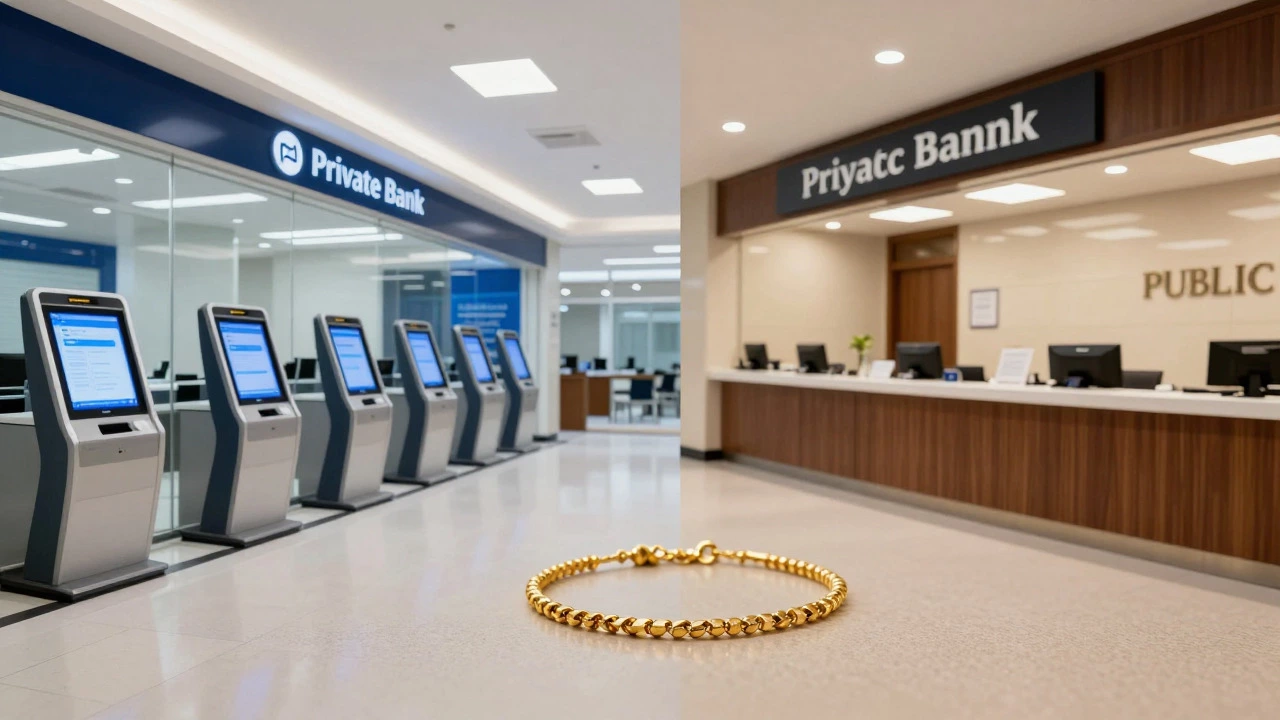
Notice the spread between public banks and local moneylenders. That gap represents the trade-off between convenience and cost. If you have time to spare, a public sector bank will likely offer you the lowest effective cost. If you need cash in under an hour, you may pay a premium for that speed.
What Drives the Gold Loan Rate?
You might wonder why two banks charge different rates for the exact same gram of gold. The answer lies in three primary drivers: the base rate, the borrower's profile, and the collateral quality.
Repo Rate is the interest rate at which the Reserve Bank of India lends short-term funds to commercial banks. When the RBI adjusts its policy rate, commercial banks adjust their lending rates accordingly. A higher repo rate generally pushes gold loan rates up because the cost of capital for the lender increases. Conversely, when the RBI cuts rates to stimulate growth, you often see a lagged decrease in personal loan and gold loan rates within a few weeks.
The second driver is the Lender's Risk Assessment, which evaluates the probability of default and recovery costs associated with a specific borrower. While gold is a tangible asset, it is not risk-free. If the gold price crashes significantly before you repay, the lender faces a potential loss if they have to auction the jewelry. Lenders factor this market volatility into their pricing. During periods of high gold price volatility, expect slightly higher rates as a buffer against downside risk.
The third factor is your own credit history. Unlike unsecured personal loans, gold loans are secured, so your CIBIL score matters less. However, if you have existing defaults or a very low score, some private banks may still apply a margin increase. For most borrowers with clean records, the rate remains fixed regardless of credit score, making this a popular option for those with imperfect credit histories.
How Purity and Weight Impact Your Effective Cost
The quoted interest rate is only half the story. The other half is how much you can actually borrow. This is determined by the Loan-to-Value (LTV) ratio, which depends heavily on the purity of your gold.
Most Indian lenders accept gold of 22K (91.6% purity) and 24K (99.9% purity). 22K gold is the standard for jewelry, while 24K is typically found in coins and bars. Lenders usually offer a higher LTV for 24K gold because it requires less refining before resale in case of default. You might get 75-80% of the market value for 24K gold, compared to 60-70% for 22K jewelry.
This impacts your effective cost in a subtle way. If you can borrow more against the same piece of jewelry, you need a smaller loan amount to achieve your financial goal. A smaller principal means lower total interest paid over the tenure, even if the annual percentage rate remains the same. Therefore, if you have 24K gold coins, consider using them for larger tickets, as they maximize your borrowing power per gram.
Hidden Costs That Inflate Your True Rate
When comparing offers, never look at the annual percentage rate (APR) in isolation. Several hidden charges can significantly raise the actual cost of borrowing. Ignoring these can turn a seemingly cheap loan into an expensive one.
- Processing Fees: Charged upfront, usually between 0.5% and 2% of the loan amount. Some lenders waive this during promotional periods, but always check the fine print.
- Insurance Premiums: Most lenders require insurance on the pledged gold. This covers theft or damage while the gold is in their custody. The cost varies by insurer and the value of the gold, often adding 0.5% to 1% to the total outlay.
- Prepayment Penalties: If you plan to close the loan early, check if there is a penalty. Many banks now allow prepayment without penalty after a certain lock-in period (often 3 months), but others may charge 1-2% of the outstanding balance.
- Auction Costs: While rare, if you default, the lender may deduct auction fees from the sale proceeds. This doesn't affect you directly unless you default, but it indicates the lender's operational costs which are baked into the rate.
To get the true cost, calculate the Annual Percentage Yield (APY) including all fees. For example, a 10% interest rate with a 1% processing fee and 0.5% insurance effectively costs you closer to 11.5% in the first year. Always ask for a breakup of all charges before signing.
Choosing the Right Lender for Your Situation
There is no one-size-fits-all lender. Your choice should align with your urgency, the amount needed, and your comfort level with the process.
If you are applying for a small amount (under ₹50,000) and need cash immediately, a nearby jeweler or a specialized NBFC branch might be the fastest route. They often have streamlined processes and can dispense cash in minutes. However, compare their rates carefully, as they tend to be on the higher end.
For medium to large amounts (₹1 lakh to ₹50 lakhs), private sector banks offer a good balance of speed and cost. Their digital interfaces allow you to upload documents online, and physical verification of gold can often be done at home via doorstep services. This reduces the hassle of visiting multiple branches.
Public sector banks remain the best option for long-term, low-cost borrowing. If you don't need the money today but want to secure a low rate for a future need, opening a gold loan account with a public bank is a smart move. Keep in mind that their processing times can be longer, sometimes taking 2-3 days for full disbursement.
Common Mistakes to Avoid
Even experienced borrowers make errors that cost them money. Here are the pitfalls to watch out for:
- Ignoring the Tenure Mismatch: Taking a 1-year loan for a 6-month need means paying interest for months you didn't use. Align your repayment schedule with your actual cash flow needs.
- Not Checking the Valuation Date: Gold prices change daily. Ensure the valuation used for your loan is based on the closing price of the day of disbursement, not a stale quote from the previous week.
- Overlooking Insurance Exclusions: Read the insurance policy. Does it cover fire? Theft? Natural disasters? Some basic policies exclude certain risks, leaving you liable for losses.
- Forgetting About Tax Implications: While the loan itself is not taxable, the interest paid is generally not deductible for individual borrowers (unlike home loans). Factor this into your net cost calculation.
By avoiding these mistakes, you ensure that the gold loan serves its purpose: providing liquidity without eroding your wealth through excessive costs.
FAQ
Is the gold loan rate fixed or floating?
Most gold loans in India come with a fixed interest rate for the entire tenure. This means your EMI or monthly interest payment won't change even if the RBI changes its policy rates. Some lenders offer floating rate options, but these are less common for short-term gold loans due to the simplicity preferred by borrowers.
Can I prepay my gold loan without penalty?
It depends on the lender. Many public and private banks now allow prepayment without any penalty after a lock-in period of 3 to 6 months. Before signing, explicitly ask about the prepayment terms. If you know you will repay early, choose a lender with no prepayment charges to save on costs.
Does my CIBIL score affect the gold loan interest rate?
Generally, no. Since the loan is secured by gold, the risk is mitigated by the collateral. However, if you have a very poor credit history or existing defaults, some private lenders may apply a slight markup. For most borrowers with average or good scores, the rate remains the same regardless of CIBIL.
Which is better: 22K or 24K gold for a loan?
24K gold is better for maximizing the loan amount. Lenders offer a higher Loan-to-Value (LTV) ratio for 24K gold because it is purer and easier to resell. If you have both, pledge the 24K gold for larger amounts and keep 22K jewelry for smaller, quicker loans if needed.
How quickly can I get the money after pledging gold?
With digital-first banks and NBFCs, disbursement can happen within 30 minutes to 2 hours if your documents are ready and gold is verified. Traditional banks may take 1 to 3 business days. Doorstep service providers can reduce this time significantly by coming to your home for verification.