Australian Savings Interest Calculator
Estimate how much you'll actually earn in your pocket after tax. Compare a standard transaction account against a High-Interest Savings Account (HISA).
Typical Rate: 0.05%
Net Annual Earnings (After Tax)
Advertised Rate: 5.00%
Net Annual Earnings (After Tax)
Breakdown:
- Gross Interest (HISA):
- Tax Paid:
- Total Deposited this Year:
Enter your details and click Calculate to see your potential earnings.
You’ve done the hard part. You stopped spending every cent of your paycheck and actually saved some money. Now it’s sitting there, doing absolutely nothing. If you’re leaving that cash in a standard transaction account earning 0.05% interest, you’re essentially losing money to inflation every single month. The question isn’t whether you should move it; it’s where to put it so it works as hard as you do.
Choosing the best savings accounts in Australia right now feels like navigating a maze. Banks change rates weekly, introduce new bonus conditions, and bury fees in the fine print. But here’s the good news: you don’t need a finance degree to find a winner. You just need to understand three things: the base rate, the bonus conditions, and how often they pay out. Let’s break down exactly what to look for in October 2026 so you can stop guessing and start earning.
Why Your Current Bank Account Is Costing You Money
Most people keep their savings in the same place they spend their money. This is convenient, but it’s financially lazy. A typical everyday bank account in Sydney pays next to nothing on balances over $10,000. Meanwhile, dedicated high-interest savings accounts (HISAs) are currently offering between 4.75% and 5.30% per annum. That’s not a small difference. On a $20,000 balance, that gap could mean an extra $900 a year in free money.
The catch? Banks aren’t charities. They offer these high rates because they want your deposits to lend out for mortgages. To get the top tier rate, you usually have to jump through hoops. These hoops are called "conditions." Understanding them is the only way to ensure you’re actually getting the advertised rate and not being tricked by a low base rate with impossible requirements.
The Three Types of Savings Vehicles
Before you open an account, you need to know what kind of tool you’re picking up. Not all savings methods are created equal. Here is the breakdown of the main options available to Australians right now.
| Account Type | Typical Rate (APY) | Access to Funds | Best For |
|---|---|---|---|
| High-Interest Savings Account (HISA) | 4.75% - 5.30% | Instant / Same Day | Emergency funds, short-term goals |
| Term Deposit | 4.40% - 4.90% | Locked until maturity | Money you won't touch for 1-3 years |
| Everyday Transaction Account | 0.00% - 0.05% | Instant | Paying bills, daily spending |
For most people, the HISA is the sweet spot. It gives you near-instant access to your cash while paying a competitive return. Term deposits lock your money away for a fixed period, which kills liquidity but guarantees the rate. Unless you have a specific lump sum you definitely won’t need for two years, stick to the HISA.
Decoding the "Bonus" Conditions
This is where 80% of savers get tripped up. An ad might scream "Earn 5.30%!" but when you read the small print, that rate only applies if you meet strict criteria. Common conditions include:
- Monthly Deposits: You must deposit at least $200 or $1,000 from another account each month.
- No Withdrawals: You cannot make any withdrawals from the savings account during the statement period.
- New Customer Only: The high rate might only apply for the first 3-6 months.
- Balance Caps: The high rate might only apply to the first $100,000 or $250,000.
If you miss a condition, your rate drops to the base rate, which is often around 0.05%. So, ask yourself: Can I reliably transfer $1,000 every month? Can I resist the urge to withdraw $50 for a night out? If the answer is no, don’t chase the highest headline rate. Choose an account with easier conditions, even if the rate is slightly lower. Consistency beats complexity every time.

Top Contenders in the Australian Market Right Now
While rates fluctuate, certain banks consistently stay competitive in the HISAs space. As of late 2026, here are the types of institutions you should be looking at.
The Big Four Challengers
Banks like Commonwealth Bank, NAB, Westpac, and ANZ have improved their game significantly. Their online-only savings accounts often match smaller banks. The advantage here is convenience. If you already have your salary going into one of these, opening a linked savings account takes minutes. Look for their "online saver" products. They usually require a monthly deposit but allow one withdrawal without penalty.
The Digital Disruptors
Neobanks and digital-first challengers like ING, Macquarie, and Up often lead the pack on rates. ING’s Savings Maximiser has been a favorite for years because of its simple structure: deposit $1,000, make five transactions, and earn the top rate. Macquarie’s Cash Management Account offers great flexibility, allowing you to link multiple external accounts easily. These platforms are built for app-based users who want transparency and fast transfers.
Smaller Mutuals and Credit Unions
Don’t overlook local players like Bankwest or regional credit unions. Sometimes they offer higher base rates because they are hungry for deposits. However, check their digital interface. If transferring money takes three days instead of instant, the higher interest might not be worth the hassle.
How to Calculate Your Real Return
Advertised rates are usually quoted as "per annum," but interest is paid monthly or quarterly. You also need to account for tax. In Australia, interest earned is taxable income. If you’re on a marginal tax rate of 37%, you’ll lose nearly a third of your interest to the ATO.
Here’s a quick rule of thumb: Take the advertised percentage rate, subtract your marginal tax rate percentage points (roughly), and divide by 12 to see your monthly gain. For example, a 5.00% rate on $10,000 earns $500 a year. After 37% tax, that’s $315 net. Divided by 12, that’s about $26 a month. It doesn’t sound like much, but compound it over ten years, and it adds up. More importantly, it beats the $0.50 you’d get in a regular checking account.

Step-by-Step: Setting Up Your Savings Strategy
Ready to move your money? Follow this checklist to ensure you maximize returns without headaches.
- Audit Your Emergency Fund: Aim for 3-6 months of living expenses. Keep this liquid in a HISA.
- Compare Current Rates: Check comparison sites like Finder or Canstar for today’s live rates. Don’t rely on ads from six months ago.
- Read the Conditions: Write down the exact deposit amount and withdrawal limits required to trigger the bonus rate.
- Open the Account Online: Most applications take less than 10 minutes via app or website. Have your driver’s license ready for ID verification.
- Set Up Auto-Transfers: Schedule a standing instruction from your salary account to your savings account on payday. Treat savings like a bill.
- Turn Off Notifications: If you see the balance growing, you’ll be tempted to spend it. Hide the account in your app or disable push notifications for that specific account.
Common Pitfalls to Avoid
Even smart savers make mistakes. The biggest one is "rate chasing." You open an account for a 5.2% rate, then six months later, a different bank offers 5.3%. You close the first account, open the second, and repeat. This creates admin chaos and might trigger credit checks if you’re applying for loans soon. Stick with one solid provider unless the rate drop is significant.
Another trap is ignoring fees. Some accounts charge a monthly fee if your balance falls below a certain threshold, say $5,000. If you dip below that to buy groceries, you might pay more in fees than you earn in interest. Always check the fee schedule before signing up.
Finally, don’t forget about government benefits. If you receive Centrelink payments, having too much money in a savings account can affect your eligibility due to asset tests. Check the current thresholds with Services Australia before parking large sums in a HISA.
Frequently Asked Questions
Is my money safe in a high-interest savings account?
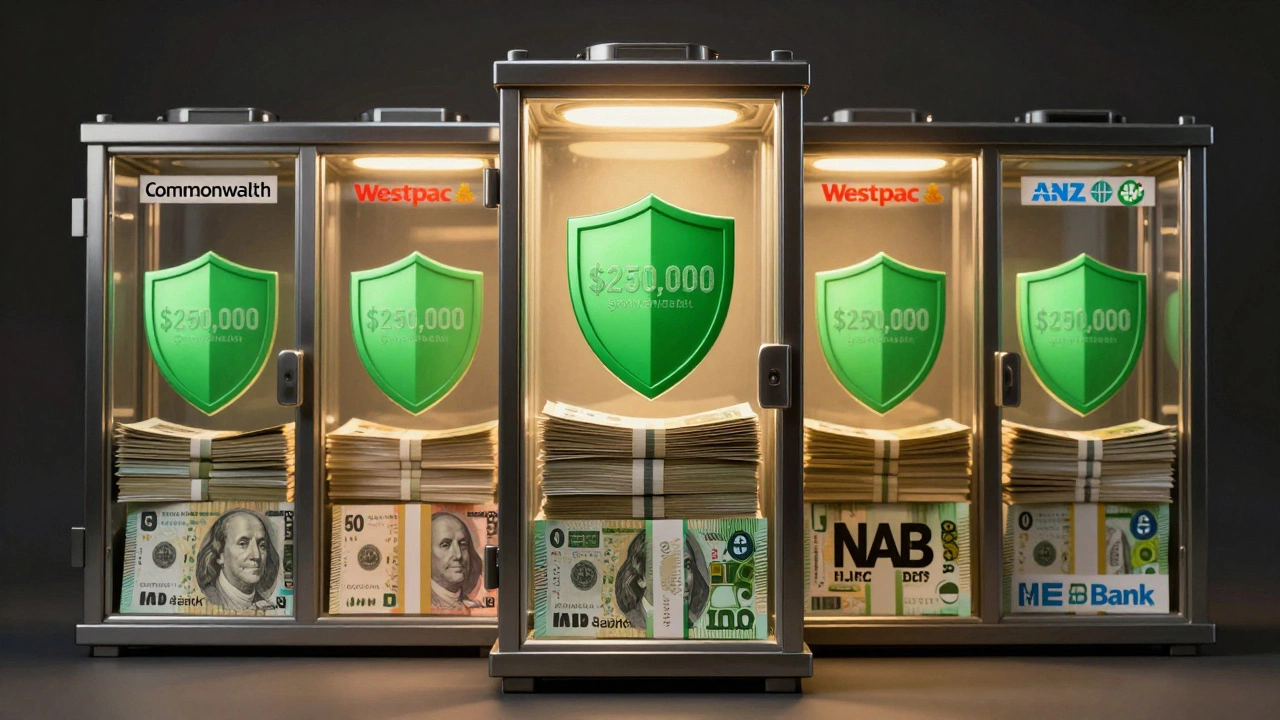
Yes. All authorized deposit-taking institutions (ADIs) in Australia are covered by the Financial Claims Scheme (FCS). This means the government guarantees up to $250,000 per person, per institution. If the bank fails, you get your money back quickly. Just ensure the bank is ADI approved.
Do I pay tax on savings account interest?
Yes, interest earned is considered assessable income. You must declare it in your annual tax return. Banks will provide a statement showing total interest earned, which you enter into your MyGov or tax software. There is no separate tax withheld automatically, so budget for it.
Can I have multiple savings accounts?
Absolutely. Many people use a strategy called "bucket saving." One account for emergencies, one for a holiday fund, and one for a house deposit. Different banks might offer better rates for different bucket sizes, so diversifying across providers can sometimes yield higher overall returns.
What happens if I withdraw money early?
It depends on the account type. For term deposits, you may face penalties or forfeit accrued interest. For high-interest savings accounts, withdrawing usually means you fail the "no withdrawal" condition for that month, dropping your rate to the base level. Some accounts allow one free withdrawal per month.
Are online banks safer than traditional banks?
They are equally safe under the FCS guarantee. Online banks often have better apps and customer service because they operate with lower overhead costs. The main risk is user error-like phishing scams-so enable two-factor authentication on all your banking apps.